
Interprofessional education (IPE) remains a foundational element of contemporary pharmacy curricula, explicitly integrated into the ACPE Standards 2025 to ensure student pharmacists develop competencies necessary for collaborative practice (ACPE, 2025). These expectations align with the 2023 Interprofessional Education Collaborative (IPEC) Core Competencies, which articulate competency domains in values/ethics, roles/responsibilities, interprofessional communication, and teams/teamwork that prepare learners to engage effectively within interprofessional teams (IPEC, 2023).
The growth of hybrid and distance-based pharmacy programs has introduced new considerations for IPE delivery. Ensuring equitable interprofessional interaction across in-person and remote learners is increasingly important as institutions adopt flexible instructional models. Prior studies demonstrate that remote and hybrid IPE formats have been associated with greater self-reported appreciation of professional roles and support development of interprofessional communication and teamwork skills (Abdelhakim et al., 2022; Kawakami et al., 2024). Hybrid and virtual case-based activities have also been associated with high levels of learner satisfaction and perceived gains in interprofessional collaboration ability (Kawakami et al., 2024). These findings suggest that thoughtfully designed hybrid IPE strategies can support key interprofessional outcomes.
However, much of the existing literature focuses on case-based discussions, simulation exercises, or structured team-based problem solving between limited professional pairings. Additionally, many studies examine fully online IPE events, characterize hybrid IPE as separate asynchronous and synchronous components, or compare fully in-person events with fully online formats, rather than evaluating models in which in-person and remote learners participate synchronously within the same event (Lazinski et al., 2021; Shamputa et al., 2022; Van Hooser & Olson, 2023). This distinction is particularly relevant in pharmacy education, as the ACPE Standards 2025 emphasize meaningful synchronous engagement in interprofessional learning experiences, even within online pathways (ACPE, 2025). In a campus where some health professions programs may operate primarily in fully in-person formats and prefer to retain that format for IPE, professional programs offering hybrid or online pathways must then intentionally integrate online and in-person learners across professions within shared synchronous experiences, increasing the complexity of instructional design and facilitation.
In addition, there is comparatively little empirical data examining rapid, rotating interprofessional networking formats designed specifically to introduce learners to roles and responsibilities across numerous professions within a single experience delivered synchronously across modalities. Based on prior iterations of this event at this institution, unique logistical and operational challenges were observed, including coordination across disciplines, structured timing of rotations, and facilitation of simultaneous breakout interactions. These challenges may be amplified in hybrid environments, where technological demands such as synchronized rotations, virtual breakout management, and ensuring equitable engagement between online and in-person participants, can be complex to implement and difficult to replicate effectively in remote settings. Despite these considerations, limited evidence exists to guide the development and implementation of scalable, synchronous hybrid rapid-networking IPE models within pharmacy education.
To address this gap, a hybrid interprofessional rapid networking (“speed dating”) event was designed to provide pharmacy learners with structured, rotating interactions across multiple healthcare professions, accommodating both in-person and remote participation in a singular synchronous event. This study evaluated learners’ perceptions of interprofessional role clarity, attitudes toward team-based care, and the effectiveness of a hybrid participation format for online learners. Authors sought to investigate whether a hybrid model was conducive to students learning about other professions; whether there were differences between in-person and online learners; and whether any barriers/facilitators emerged for online learners participating in the event. By examining this innovative and logistically complex IPE model within a pharmacy education context, this work contributes evidence to inform scalable, hybrid-ready approaches to interprofessional learning.
Methods
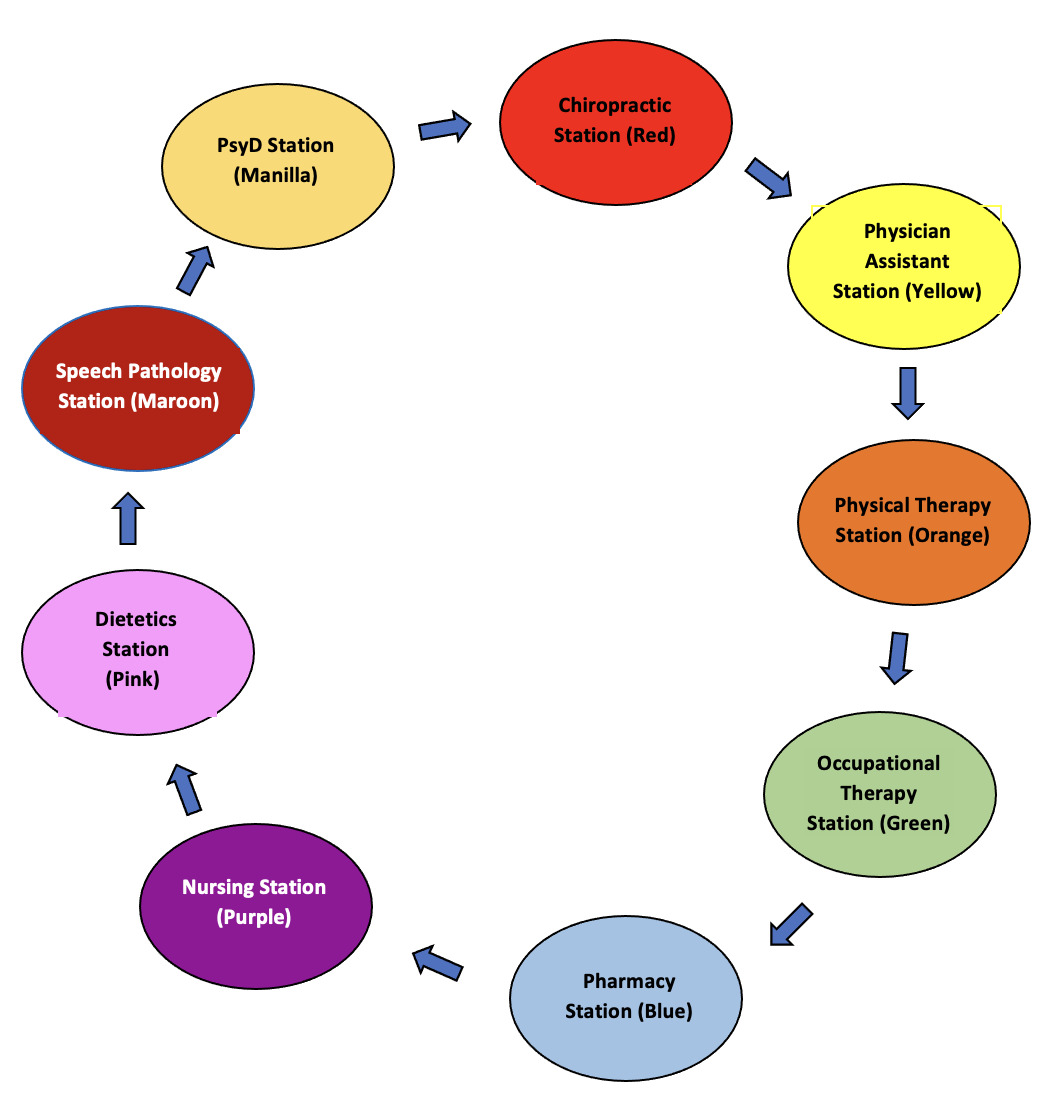
Approval was obtained prior to any data collection on the study by the Institution’s IRB board. Ninety-seven online pharmacy students used online software (Zoom) to participate in one of three IPE Speed Dating sessions offered to all professional-program enrolled students on campus in Fall 2025. A total of 358 students (260 in-person, and 97 virtual attendees) from nine professional programs attended a 90 minute “Speed Dating” IPE event once during the semester. In-person students were pre-assigned into interprofessional groups before each session, and each group comprised about six to nine students. The nine programs in this event included Chiropractic, Dietetics, Occupational Therapy, Pharmacy, Physical Therapy, Physician Assistant, Psychological Doctorate (PsyD), Speech Language Pathology, and Undergraduate Nursing. Between two and four online pharmacy students were assigned into each interprofessional group of in-person student learners. Online students used Zoom to access the sessions and were rotated to each station using breakout rooms. Students received the station rotation schedule (the “flow” of events and timing of each station) during the pre-briefing and were tasked with moving themselves into the next breakout room with their pre-assigned group when it was time to change stations. During the event, a pharmacy faculty member was present to facilitate the online technology and help online students move between stations as necessary. Information Technology (IT) was present prior to the event to set up the cameras, laptops, and log in-person faculty facilitators into the Zoom session just before the events began. The flow of each station is illustrated in Figure 1.
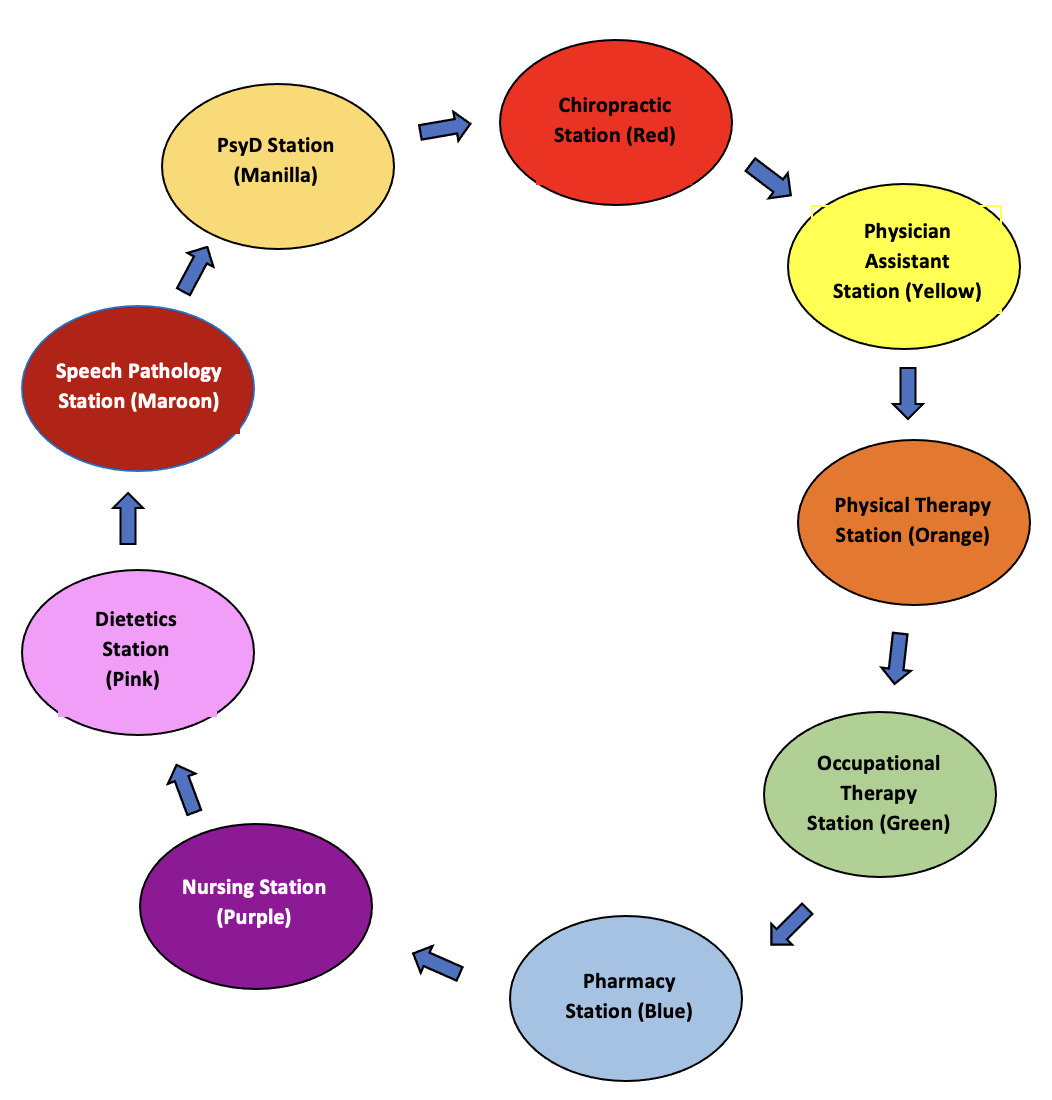
Learners at each station were given a two- to three-minute introduction to the profession (“in a nutshell”) by a student of that profession, and the remaining five to six minutes at each station were spent allowing students to ask questions about that profession, mediated by either a faculty member or a working professional. When time was up after each nine-minute station, groups rotated to the next station (Figure 1). Online students advanced to the next station by self-selecting the appropriate Zoom breakout room according to the assigned rotation schedule. IT and technical staff were on standby during the sessions to manage any technical issues that arose. Each station was equipped with sound, a large (70-inch) TV monitor, a laptop, and a 360-degree voice-activated camera.
Student participants were surveyed about their experience after each session (both online and in-person attendees). To gather qualitative feedback, two questions were added to surveys (for both online and in-person learners) including: “Is there any way you think Speed Dating could be enhanced or made better?” and “What did you like about IPE Speed Dating? Is there anything you learned that you believe will enhance your patient care?”
Results
Quantitative Analysis
Quantitative survey scores were reported using descriptive statistics with medians and interquartile ranges for each survey question. Learners completed a modified SPICE R2 (Zorek et al., 2016) evaluation at the completion of the event. Each survey question had a Likert scale response from 1-5, with 1 indicating “Strongly Disagree”, 2 indicating “Disagree”, 3 indicating “Neutral”, 4 indicating “Agree”, 5 indicating “Strongly Agree”. A Mann-Whitney U test was used to compare the differences in Likert-scale survey data results between the in-person and online cohorts. P-values <0.05 were considered statistically significant. An effect size (r) of <0.3 indicates a small difference between cohorts. All quantitative analyses were conducted using IBM SPSS Statistics version 28.0.1.0.
Three items were removed from the original 10-question SPICE R2 evaluation (items two, three, and six, respectively). Survey item two (my role in an interprofessional team is clearly defined) was removed because learners at this event were novices who did not participate in any prior IPE activities where this item would be better assessed. Items three (patient/client satisfaction is improved when care is delivered by an interprofessional team) and six (healthcare costs are reduced when patients/clients are treated by an interprofessional team) were also removed because the event did not address patient satisfaction or costs of care.
Quantitative Results
A total of 358 students participated in the hybrid interprofessional rapid networking event during the Fall of 2025, and complete post-event survey data was collected from 302 students, which evaluated student perceptions after participating in the Hybrid Interprofessional Rapid Networking Event (84% response rate). Twelve students were removed from the final analysis, all of which were online pharmacy students (seven removed as they did not consent to participate in research, five removed due to incomplete evaluation data). Of the 302 participants with complete evaluation data, 60 students were online pharmacy students, and the remaining 242 were in-person students (58 nursing students, 46 physician assistant students, 37 in-person pharmacy students, 32 chiropractic students, 28 physical therapy students, 17 doctor of psychology students, 15 occupational therapy students and nine speech-language pathology students). Completion of the survey was voluntary, and student responses were not linked to personally identifiable information.
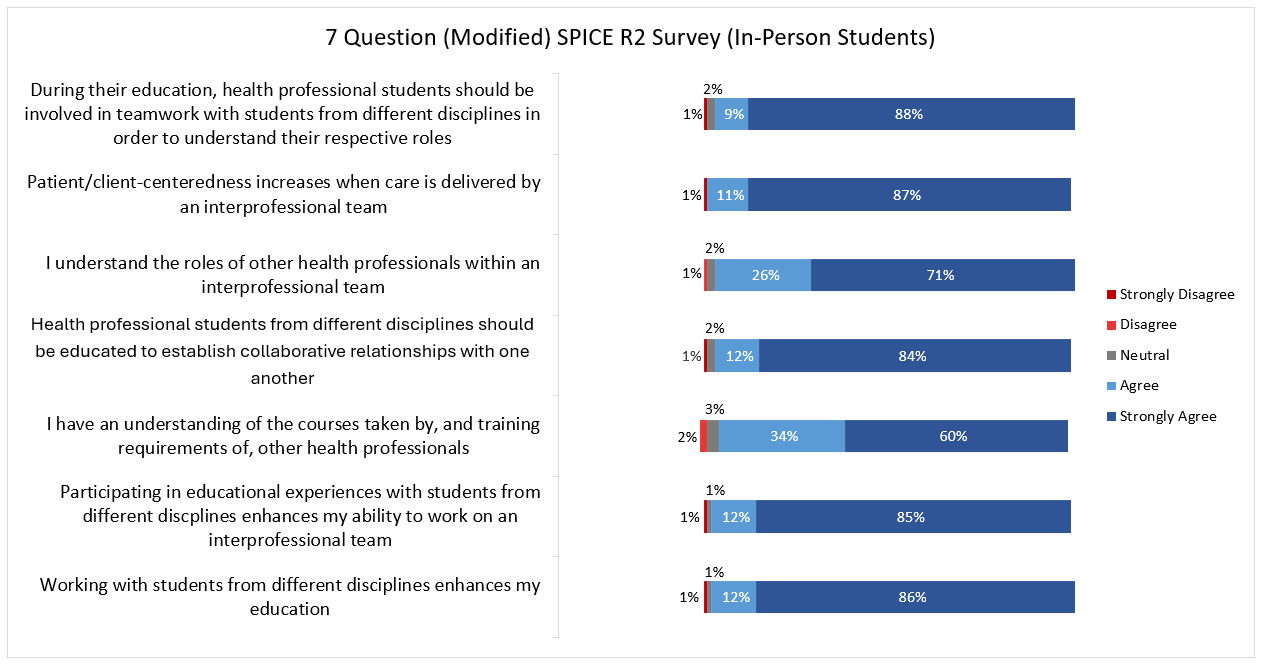
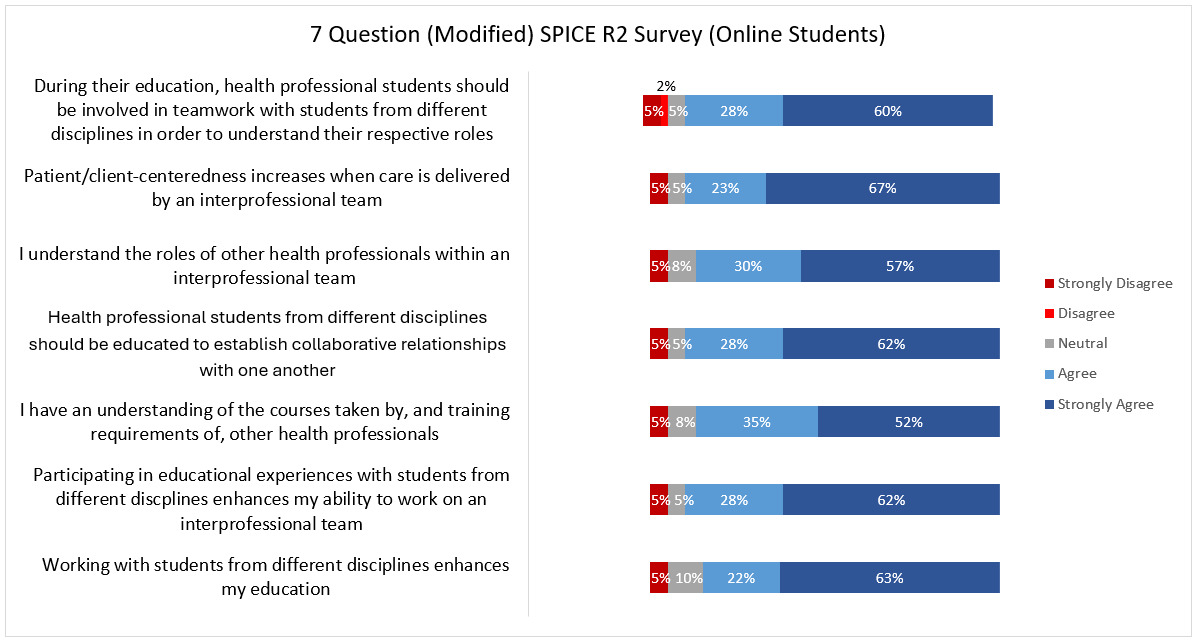
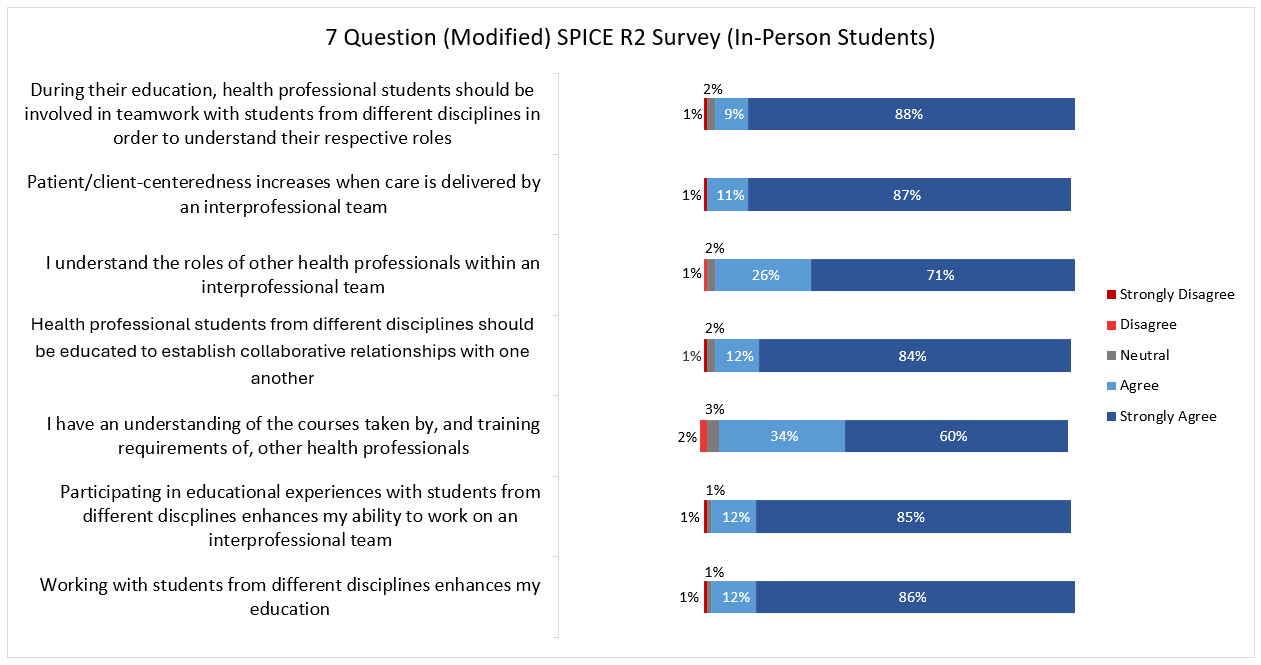
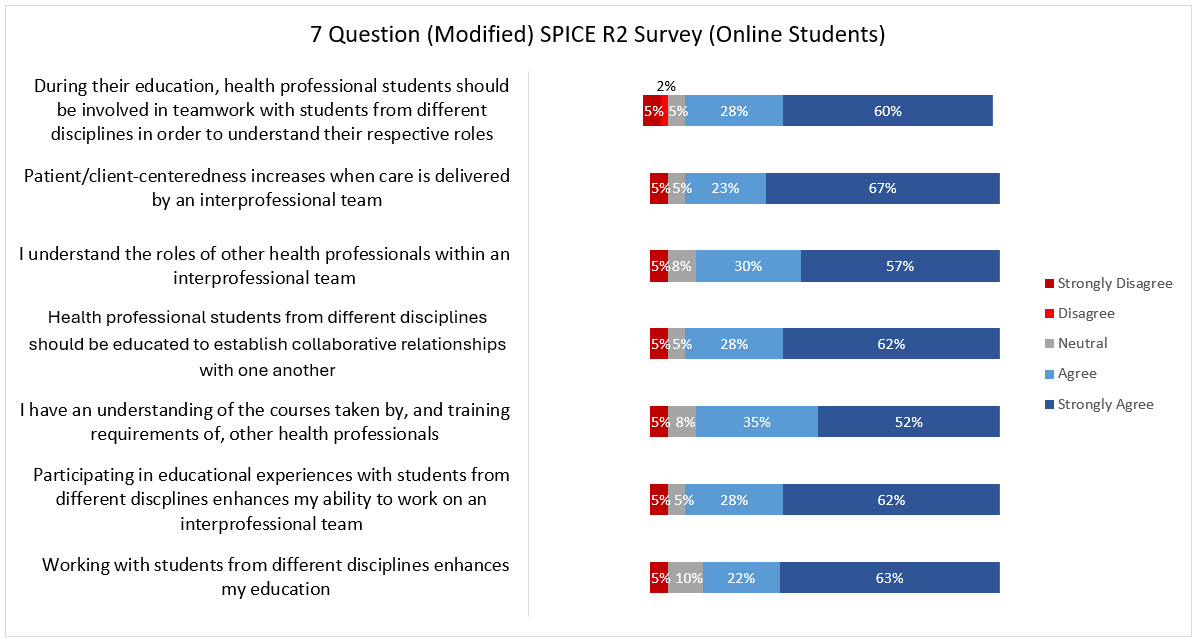
Table 1 shows the median scores and interquartile ranges from the seven evaluation questions for all students, comparing scores between the in-person and online cohorts. A Mann-Whitney U test was performed to evaluate whether the post event survey results differed in the in-person vs. online student cohort. The results indicated that there were significantly higher survey scores in most of the survey questions for the in-person student cohort vs. the online student cohort surrounding teamwork, roles and responsibilities, and values (Q1, p = <0.001; Q2, p = <0.001; Q4, p = <0.001; Q5, p = 0.16; Q6, p = <0.001; Q7, p = <0.001). The only survey question that did not reveal a statistically significant difference in score between cohorts was question three, which focused on background requirements of other healthcare professionals (“I have an understanding of the courses taken by, and training requirements of, other health professionals”, p = 0.12). Despite this, the effect size was found to be low for each survey question, indicating modest differences in findings between the two cohorts. The survey data results are further illustrated in Figure 2, with item-level comparisons between the two cohorts for each survey question.
Online students completed three additional questions (questions 8, 9 and 10) in their survey, which evaluated the effectiveness of the hybrid format. Survey responses for each question are reported in Appendix A.
Qualitative Analysis
Student Satisfaction Surveys for all students had two additional questions that were short answer to allow for qualitative feedback: “Is there any way you think Speed Dating could be enhanced or made better?” and “What did you like about IPE Speed Dating? Is there anything you learned that you believe will enhance your patient care?” Thematic analysis was used to analyze these data and several themes emerged.
Qualitative Results
Written comments were analyzed for themes using an inductive approach. Data were analyzed by hand using Microsoft Word. There were 26 written comments in response to “is there any way you think speed dating could be enhanced or made better?” Four overall themes emerged (from parent nodes) from these data including: poor audio quality (n=10); lack of engagement (n=8); need more time for this event (n=6); and need for improved pre-briefing (n=3). One comment was coded into two different themes.
The need for better technological support was mentioned most regarding poor audio at the event. Students felt there was too much background noise to hear adequately, and this made it difficult to fully engage in the session. One participant said “the sound quality wasn’t the best because the rooms were so close to one another. I felt like I couldn’t hear my room or maybe the person in the other room spoke loudly I am not sure.” Another noted “…the online pharmacy students could not hear [for the] majority of the groups… [so we felt we were not interacted with]… I tried addressing 4 times that we could not hear anyone and was ignored each time and ultimately gave up.”
Students also felt they were not engaged with by the in-person faculty enough. For example, one student said: “[in-person faculty did not interact with] the online students because they mainly focused on the on-campus students.” They also wished there was a way to “make sure the in-person groups engage with online people” and that “online students [were] given less priority so if we could be included that would be nice.”
Another theme was about the duration of the event, and specifically the time at each station. Most comments reflected a wish to have more time at each station, although there was one comment that “it felt too long.” Most, however, felt additional time would be beneficial: “slightly longer time to either ask or answer questions [would be better],” or “it needs more time in each profession’s room to address questions correctly.”
The last theme reflected that learners felt preparation could be better to reduce confusion during the event. For example, one participant said “improved…coordination in the preparation [may ensure] the online students [are not] left behind.” Other comments reflected confusion about where to be at what time, and there was no obvious sound indicating it was time to change stations: “there should be a buzzer when the time to move to next room or phase to know where we are going.”
When asked what they felt was good or what they learned from the event, three themes also emerged. The largest theme was that learners felt they did learn about other professions (n=26/35 comments), followed by additions to the negative themes above including needing improved audio and better engagement of the online students. Comments such as “I learned about different health professionals and how PAs, PT, Speech Pathologists treat patients and how nurses can also work with pharmacists” or “I liked how each health professional student got involved and interacted to share their role and responsibility in providing the best patient care.”
A child node in this category emerged that this event could enhance collaboration. Exemplar comments in this category include: “liked how IPE Speed Dating allowed me to learn directly from other healthcare professions. It helped me understand how teamwork and communication improve patient outcomes, which I can apply to provide better coordinated care” and “collaborating with other healthcare professionals provides mutual learning and benefits the patient.” Another said, “I learned differences in certain types of occupations that would influence my work in healthcare.”
Discussion
Rapid networking events such as “Speed Dating” have been shown in other reports to enhance interprofessional collaboration among working professionals (Laprise & Thivierge, 2012) and student learners (Renaut et al., 2015). The Speed Dating model has been reported as being effective at increasing networking and knowledge exchange between post-licensure health professionals. This pedagogy has been reported to support learning about and from other specialties (Winterbottom & Seoane, 2012). There have been past reports citing that while rapid networking is effective, it may represent scalability challenges for large groups (Blythe, 2018). There is a gap in the literature with no reports of rapid networking using a hybrid or virtual model. With the burgeoning of online education programs, virtual or hybrid rapid networking may represent an opportunity to facilitate this type of interprofessional education.
Using the hybrid model, this study was able to compare online and in-person learner experiences, their satisfaction with and perceptions about both modalities. Online user experience was significantly lower than in-person satisfaction, and the mixed method design of this study assisted in illuminating why. Lower engagement and difficulties with audio quality represented impairments that detracted from virtual student experience. While survey results indicated that in-person students scored higher overall in the post-event survey, both the medians and IQRs for each question were highly skewed toward agreement and similar across groups (mostly 5 [4–5] or 5 [5–5]). This may suggest a ceiling effect, where small distribution differences (e.g., more “Strongly Agree” than “Agree”) drove significance, especially given the larger in-person sample (242 in-person compared to 60 online students). The small effect sizes for each survey question appear to support this interpretation, all of which were less than 0.3. Although the differences in these scores were found to be statistically significant for most survey questions between the two cohorts, these differences should be interpreted cautiously as all online learners were pharmacy students while the in-person cohort included multiple health professions. Lower scores among online learners may reflect the hybrid delivery format, but they may also be influenced by differences in professional identity, prior IPE exposure, expectations for the event, or the experience of joining an already established in-person interprofessional group remotely.
Learners felt that their understanding of the other professions could enhance their future patient care in some way. For example, one participant noted: “I liked having different rooms specific to each specialty and learning how each profession interacts with one another. This helped show how I can effectively work with other professions.” Another felt that “having the opportunity to interact with students from different professions, I learned how important collaboration is across disciplines to provide holistic care.” Or “Collaborating with other healthcare professionals provides mutual learning and benefits the patient.”
The biggest challenge to having this as a hybrid experience was that the audio was a significant challenge for the online participants. While most stations were equipped with 360 cameras, there seemed to be a great deal of background noise, insufficient volume on the speakers, or other issues that led to disengagement. This is in large part due to the logistics of having the event in-person. The University had been hosting this IPE experience in person for several years before the online pharmacy program asked to be added to create a hybrid style in 2024. Even prior to adding the online students, in-person students noted having a difficult time hearing due to background noise. The logistical challenges of finding enough space on campus to have the event was significant. The event was hosted in a large conference room (the largest on campus), or in the simulation center that included having stations in separate rooms, but there were numerous stations that had to share those rooms. Thus, no stations had their own rooms, leading to ambient noise.
Online student comments indicated that due to the audio difficulties “online and in-person should be separate” or “[this would be better if] everyone was online.” This may represent an opportunity as University enrollment changes, more programs move to online learning, or more programs move completely online, to overcome the logistical issue of having adequate space. Moving the event to a purely online format allows for a scalability not possible to achieve otherwise due to the constraints of existing space. One student commented “I don’t feel that I got the information and experience that we should have gotten, and I think making this completely online would have been better. That way both in person and online students would have been active in the same format and no one would be left out in breakout rooms and professors could focus on the group as a whole.”
Also, due to the rapid nature of the event and short duration of time spent at each station, this format may be particularly sensitive to small technical disruptions. Even a short delay due to audio troubleshooting or confusion about breakout rooms can substantially reduce meaningful interaction time for online learners.
Another challenge revealed in the analysis was that pre-briefing could be improved, hopefully reducing online student confusion. Students were pre-briefed about what to expect, how the event was structured, and how they would move from station to station, but several comments revealed they were still confused. While it’s never possible to pre-brief to a level that every learner hears everything that they are told during pre-briefing, there are ways this might be optimized. Students participating in this event had a synchronous pre-briefing session with faculty explaining the flow and how the event was going to be conducted and allowed for Q&A they also had pre-session work that detailed the objectives, what to expect, and some additional preparation work. This might be improved by the addition of a pre-recorded video in which students could see graphics depicting the flow of the event, given handouts about how the timing would work, and what signal would indicate they should proceed to the next station. One student commented that “it took a couple of stations, but then we got the hang of it.” While it may not be possible to eliminate this challenge entirely, it may be more efficient if the faculty facilitators were moved from station-to-station instead of learners.
Analysis also revealed that online learners felt they were not given equal opportunity to participate by faculty facilitators at every station. This suggests that equitable hybrid IPE requires more than functional technology. Faculty and peer facilitators may need explicit training on how to include remote learners, such as intentionally inviting online participants into the discussion, repeating in-room questions, checking audio at each station, and assigning a student or facilitator to monitor the Zoom room. The online learners’ experience can be interpreted through social presence theory, which holds that learning in mediated environments depends on participants’ ability to perceive others as real and to interact reciprocally (Garrison et al., 2001). In this event, poor audio and limited facilitator attention to remote learners likely constrained both. Because the nine-minute stations left little time to recover from disruptions, the format may also have been vulnerable to these limitations. These findings suggest that equitable hybrid IPE depends on deliberately designing for presence, through audio infrastructure, facilitator training and structured prompts, in addition to providing access.
This study has several strengths and limitations. The event included 358 students from nine different health professions programs, giving the study a reasonably large and diverse sample. This breadth makes the findings more representative of real interprofessional dynamics than studies limited to a smaller variety of health professions. Despite this, it was conducted at a single institution using one event model, which may limit generalizability. The study relied on self-reported perceptions rather than direct assessment of interprofessional competency development. The survey instrument was modified, which may limit comparison to other SPICE-R2 studies. The online group included only pharmacy students, while the in-person group included multiple professions, creating potential confounding between modality and professional program. The uneven number of these groups was also potentially confounding to results. There were 261 in-person students participating, and only 97 online pharmacy students. While overall satisfaction survey participation was 84%, there were a small number of comments to use in the qualitative analysis.
Despite lower satisfaction among online learners, the event appeared to meet its primary educational outcome of increasing familiarity with other professions. This distinction is important because feasibility and learner satisfaction were challenged by the hybrid format, but learner’s perceptions of the event’s educational value remained favorable. The strongest perceived benefit of the event aligned with the IPEC roles/responsibilities domain, as students described improved understanding of other professions’ training, scope, and contributions to patient care. However, the challenges reported by online students also highlight the importance of the interprofessional communication and teams/teamwork domains, particularly when learners participate across modalities. Rapid-networking or “Speed Dating” IPE is an event that can be delivered as a hybrid experience, or one that is purely online, but either one can be an effective format for introducing students to other health professions.
Lessons Learned
-
Future hybrid IPE activities should include intentional design strategies to ensure online learners have comparable opportunities for active engagement, communication, and team-based discussion, supporting ACPE expectations for meaningful interprofessional learning across all program pathways. Future iterations may consider either a fully online format or a redesigned hybrid model with stronger audio infrastructure, structured engagement prompts, enhanced facilitator training, and standardized rotation procedures to improve equity between online and in-person learners.
-
Adding a dedicated online learner advocate or monitor at each station may enhance the effectiveness of the online experience. Pre-briefing this role could include how to engage online students in discussion, monitoring chat discussions, and ensuring remote learners are invited to ask and answer questions at each station.
-
Logistical formatting may need to be individualized for each institution with consideration to space planning, available technology, and availability of IT department/technical assistance with running the event.
-
Ensure pre-briefing is robust for both students and faculty. Detailed instructions about what to expect at the event, or adding a rehearsal, may better prepare both learners and facilitators for the actual event.
-
Despite lower satisfaction among online learners, the event appeared to meet its primary educational aim of increasing familiarity with other professions.
Conclusion
While in-person students scored higher overall compared to their online peers in the post-event survey, both cohorts skewed heavily towards “agree” and “strongly agree” for each survey question. Most comments indicated that participants did learn about other professions and noted that they felt this knowledge would enhance their patient care. Technology issues and improved pre-briefing were the largest areas for feedback. Most students indicated that the primary outcome (“students will have increased familiarity with the scope of practice about other professions”) was met, as highlighted in the following comment from one of the participants: “I liked how IPE Speed Dating allowed me to learn directly from other healthcare professions. It helped me understand how teamwork and communication improve patient outcomes, which I can apply to provide better coordinated care.” While the format of this study does not allow for evaluation of learner outcomes, this may represent an area for future research in this area.