
Online graduate education has transitioned from a temporary pandemic-era necessity into a permanent, high-growth, and mainstream component of global education. In addition to fully online courses and degree or certificate programs offered by online educational institutions, many traditional universities now offer online curriculum components, thereby allowing the traditional course to be augmented or supplemented with online courses. As technology has improved and evolved, so have the means of delivering online education, and recent years have seen a proliferation of online experiences being offered by numerous educational institutions, allowing students the ability to pursue a broad range of degrees and credentials (Bouchrika, 2026). A wide variety of delivery mechanisms, platforms, and learning management systems (LMSs) are currently in place to meet the demands of the rapidly evolving online landscape. Course developers and educators have also realized that the use of the LMS provides both opportunities and challenges, that if addressed appropriately, could indeed provide enhanced learning experiences for their students. This includes the incorporation of hybrid components which involves a combination of synchronous and asynchronous activities.
Benefits and Challenges Related to Online Learning
Online programs offer technology-based instructional environments that expand learning opportunities and can provide top-quality education through a variety of formats and modalities. The integration of digital technologies into education certainly represents a significant evolution in the pedagogical landscape, with the potential to enhance accessibility, engagement, and personalization in learning (Emerson, 2025). With the specific characteristics and needs of adult learners who need or want to continue their education, online programs offer a convenient solution to conflicts with work, family, and study schedules (Bloomberg, 2021). The flexibility and mobility of online learning make this an attractive way to study, and learners can access online programs–even across borders–without having to completely interrupt their already active lives. Yet despite these benefits, lack of persistence and attrition remain an ongoing challenge in online programs, and research indicates that higher education enrollment in online courses is consistently characterized by lower retention and degree completion rates than traditional courses (Bloomberg, 2021; Greenhow et al., 2022; Nichuhovska, Nikolenko, et al., 2024; Yalçın & Dennen, 2023; Zou et al., 2025).
While an online method of education can be a highly effective medium of education for a self-disciplined, autonomous student, this may be an inappropriate learning environment for dependent learners (Bloomberg, 2021). Online asynchronous education offers learners control or agency over their own learning experience and allows for flexibility of study schedules for non-traditional students; however, this also places a greater responsibility on the learner. Self-regulation and autonomy play a critical role because online environments typically require students to manage much of their own learning process (Hensley, 2024; Unal Cakiroglu et al., 2024; Yalçın & Dennen, 2023). In order to successfully participate in an online program, learners will need to be well organized, self-motivated, and possess effective organizational and time management skills in order to keep up with the pace of the course. Moreover, successful on-ground instruction does not always translate to successful online instruction, and facilitators require appropriate professional development related to online delivery and methodologies (Bloomberg, 2021, 2022, 2026; Bloomberg & Grantham, 2018). It is clear that while online programs encompass significant strengths, there are weaknesses inherent in this medium that can pose potential threats to student success. The curriculum, facilitator, technology, and learners themselves must be carefully considered in order to take full advantage of the strengths of this format and at the same time avoid pitfalls that could result from its weaknesses (Bloomberg, 2021, 2026). As such, educators in all online contexts will increasingly need to understand and develop the knowledge and skills that will allow them to be effective in addressing the multiple needs of a diverse adult learner population.
This review integrates theoretical and conceptual strands underlying adult learning, including andragogy, self-regulated learning, self-directed learning theory, and heutagogy and explores the application of theory to online teaching best practices. This integrated framework that has been developed can be adapted across various online contexts while maintaining theoretical coherence and practical viability.
Defining Engagement
Engagement is widely recognized as essential for learner satisfaction and course completion, and research consistently indicates a clear link between instructor engagement, learner engagement, and actual learning (Ferrer et al., 2022; Khan et al., 2017; Martin & Bolliger, 2018; Melián et al., 2023; Rajabalee & Santally, 2021; Welmer et al., 2025). Klemencic (2015) introduced a theory of student agency to the study of student engagement, explaining that agency refers to the quality of engagement of students with their environment. This theory encompasses variable notions of agentic possibility (“power”) and agentic orientation (“will”). The notions of agentic possibility and orientation are temporally embedded, implying that these are shaped through considerations of past habits of mind and action, present judgments of alternatives for action and projections of the future. Moreover, these are also intrinsically relational and social, and situated in structural, cultural and socio-economic-political contexts of action. Bond et al. (2020) defined engagement as the energy that manifests through five interconnected dimensions which work together to create meaningful learning experiences: (a) behavioral engagement (observable actions like completing assignments); (b) cognitive engagement (mental investment through critical thinking); (c) emotional engagement (feelings and attitudes toward learning); (d) social engagement (connections supporting community building); and (e) collaborative engagement (relationship-building for collective knowledge construction).
In the online environment, engagement may not occur spontaneously without instructors’ intention and effort, and there are multiple ways to enhance engagement through facilitation techniques by welcoming, onboarding, and supporting learners, building working relationships, and teaching through those relationships (Bloomberg, 2021, 2022, 2023, 2026; Bloomberg et al., 2025). Riggs and Linder (2016) proposed the idea of an “architecture of engagement”. The theory of transactional distance, developed by Moore (1997) explains the perceived “psychological and communication space” in the online learning environment, often causing students to participate minimally, disengage, or completely withdraw. To mitigate the effects of transactional distance and facilitate persistence it is incumbent upon instructors to intentionally and thoughtfully implement pedagogical strategies that will keep learners motivated and actively engaged. McNeil and Ahlf (2026) demonstrated that effective online engagement emerges not from isolated interventions but from systematic course design that intentionally addresses multiple engagement dimensions through carefully orchestrated interactions and evidence-based practices.
Theoretical and Conceptual Principles of Adult Learning
When considering the online adult learner and the ways in which to create and facilitate a successful online learning experience, one must first understand what is the teaching approach that is adopted, and how this approach is being implemented and articulated to maximize engagement. The following is a review of appropriate adult learning theories with specific application to the adult online learner. As is evident, these theories build upon one another, and as this review illustrates, many of the foundational concepts are interconnected.
Andragogy
Andragogy, as defined by Malcolm Knowles (1984; 1980), is “the art and science of helping adults learn.” This theory, further developed by Knowles et al. (2015), builds upon constructivism, which suggests that learning is an active process, whereby adult learners construct meaning based on their own experiences. In developing this theory, Knowles (1980) proposed a set of assumptions about adult learners which have become the foundational principles of andragogy:
-
Adults need to know the value of what they are learning
-
Adult learners are self-directed and autonomous
-
Adults incorporate their prior experiences
-
Adult readiness to learn depends on the relevancy of the topic
-
Adults learn best with tasks that are problem-centered or life-oriented
-
Adults are motivated by internal motivation and self-esteem.
When teaching adults, a facilitator does not operate under the traditional concept of teaching, but rather adopts a learner-centered model, assisting learners through self-exploration, reflection, and dialogue. Unlike the lecture style, facilitators ask learners to question and explore ideas rather than simply having the answers given to them. The instructor’s role as facilitator is “guide-on-the-side”, or “learning partner”, as opposed to “sage-on-the-stage” (Bloomberg, 2021). Placing the student at the center of the learning process and giving them the tools to take charge of their education signifies a departure from conventional educational paradigms, in that a sense of agency or autonomy is initiated (M. Knowles, 1984, p. 2015). This approach initiates for students a strong sense of accountability for their learning results, flexibility, and critical thinking abilities, all of which have direct application to becoming a successful and self-regulated online learner (Chametzky, 2014; Livingston & Cummings-Clay, 2023).
Self-Regulated Learning
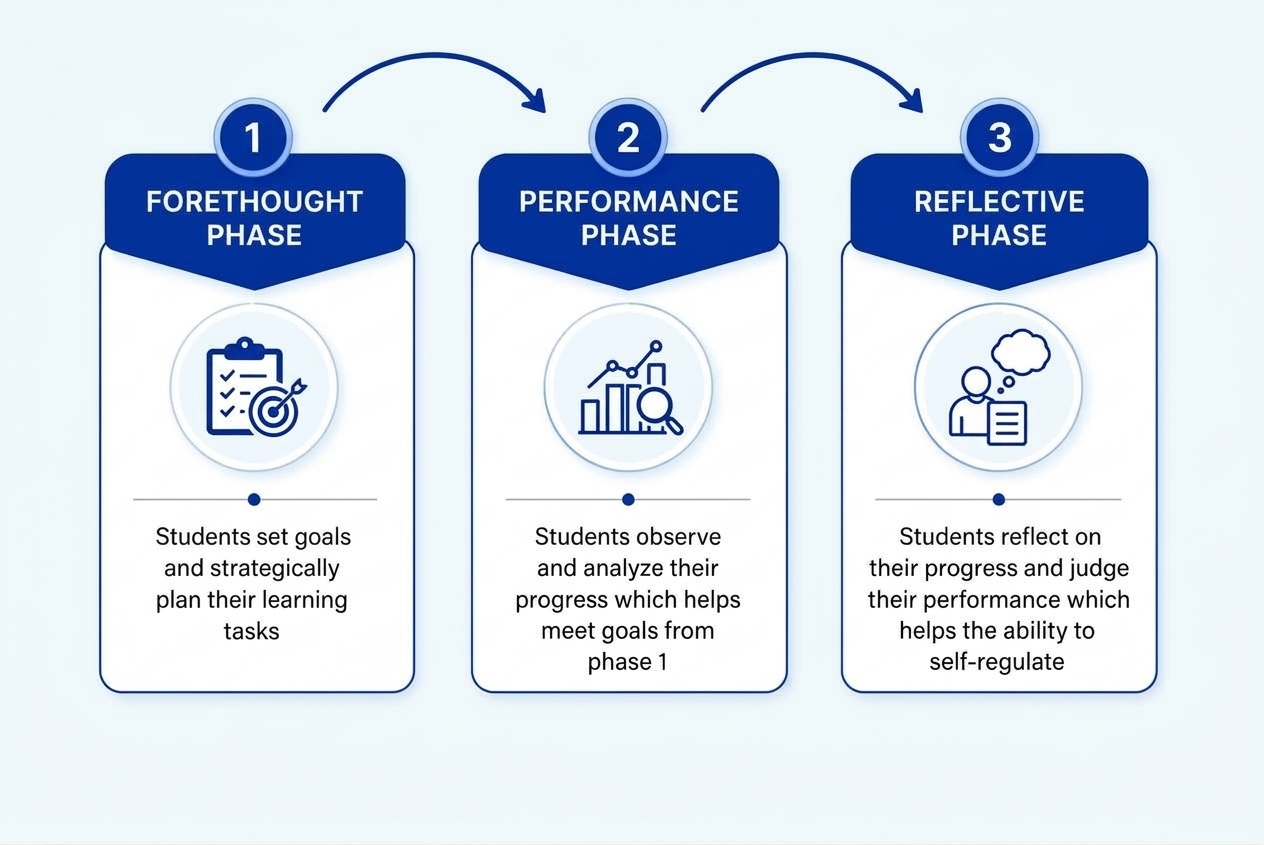
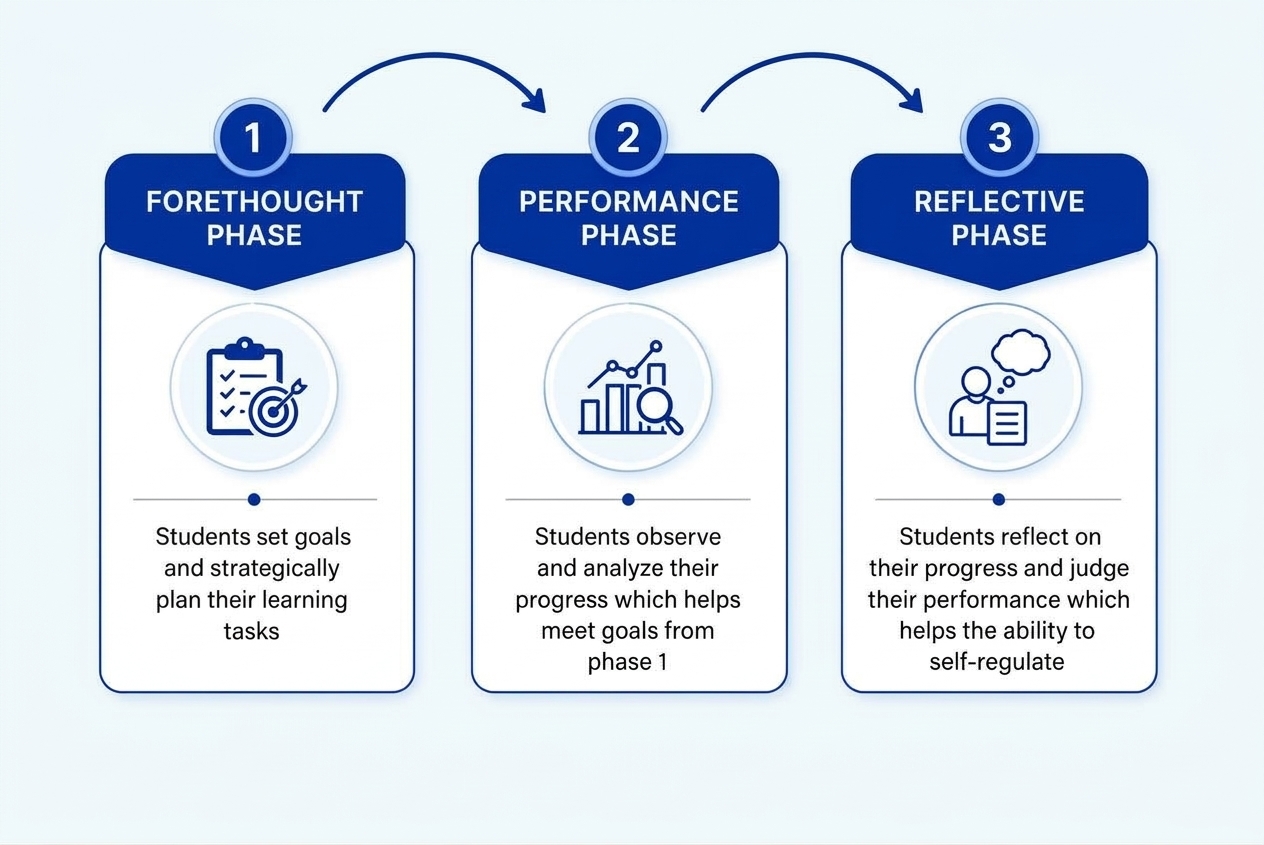
Self-regulated learning, a logical extension of andragogy, establishes much of the theoretical and empirical foundation for understanding how learners actively manage their own learning processes. Self-regulated learning supports learners to regulate their cognition and manage their learning process and is a predominant requisite to systematize the learning process and evolve as autonomous learners (Mekala & Radhakrishnan, 2019). Zimmerman (1989, 2000, 2002) conceptualized self-regulated learning as a cyclical process involving three interrelated phases: forethought (goal setting, strategic planning, self-efficacy beliefs), performance (self-control, attention focusing, strategy use), and self-reflection (self-evaluation and adaptation). His social-cognitive perspective emphasizes that learners are not passive recipients of instruction but active agents who monitor and regulate cognition, motivation, and behavior. Zimmerman’s work has been especially influential in online learning research, where autonomy and learner control (agency) require strong metacognitive and motivational regulation. Zimmerman (2002) explained how using metacognitive strategies to develop self-regulated learning skills occurs in three phases, as illustrated in Figure 1.
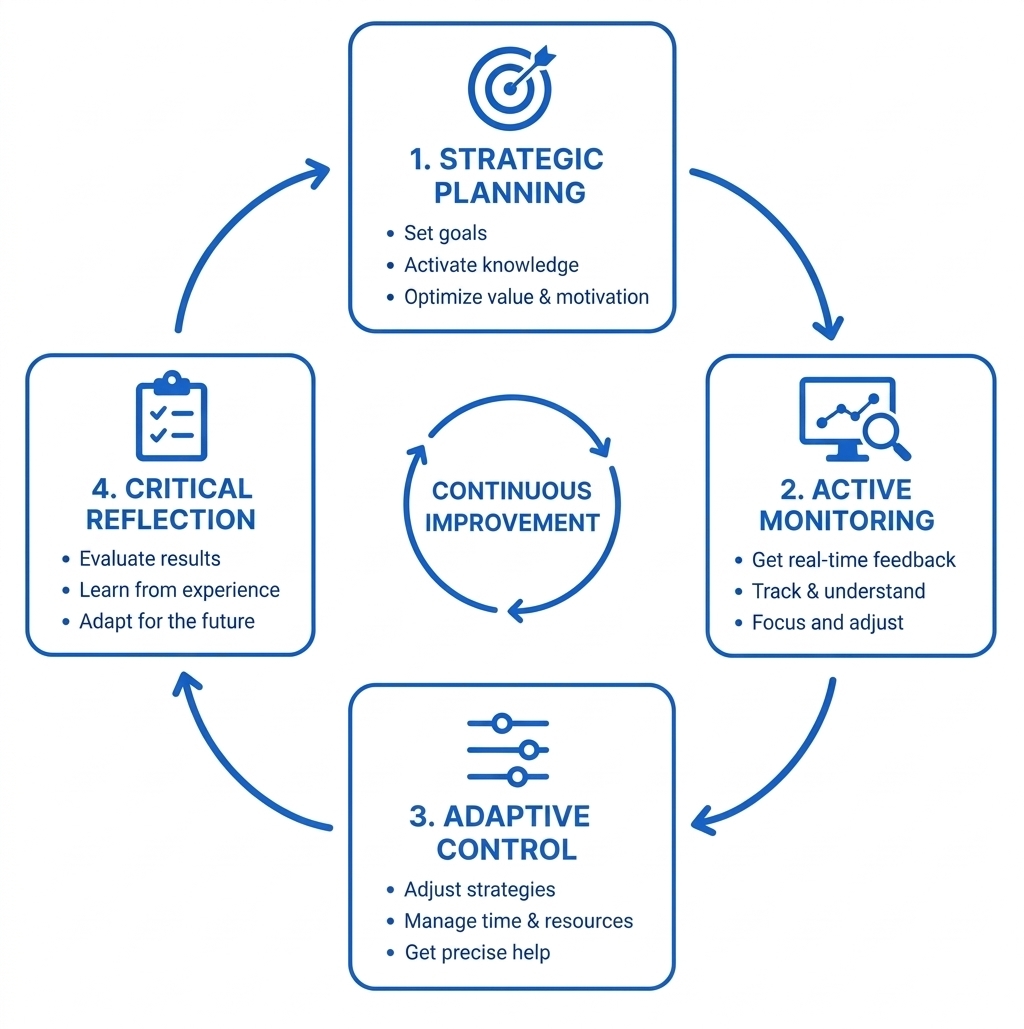
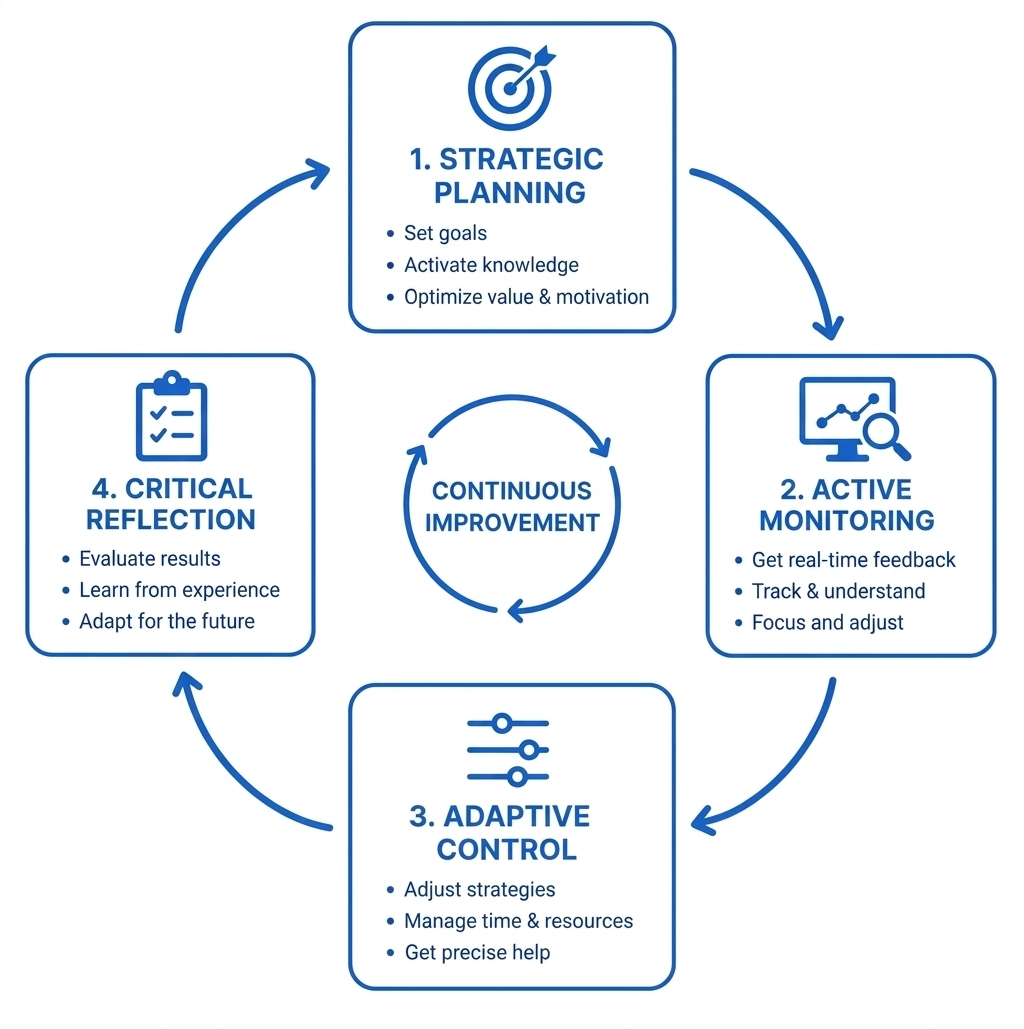
Pintrich (2000, 2004) expanded the concept of self-regulated learning by integrating motivational constructs with cognitive and metacognitive regulation. The proposed comprehensive framework was organized around four phases—planning, monitoring, control, and reflection—operating across cognitive, motivational/affective, behavioral, and contextual domains as illustrated in Figure 2. Pintrich highlighted the role of goal orientation, task value, and motivation in shaping how students regulate learning, making this model particularly useful for designing instructional environments that support engagement and persistence in online and hybrid settings.
To be successful in the online learning environment, learners must monitor and regulate their cognition, motivation, and conduct, as well as reflect on their learning process, as implied in theories of self-regulation. Two foundational theories have contributed to self-regulated learning: self-directed learning and heutagogy, both of which link back to the key principles of andragogy and have significant application to adult online learners.
Self-Directed Learning
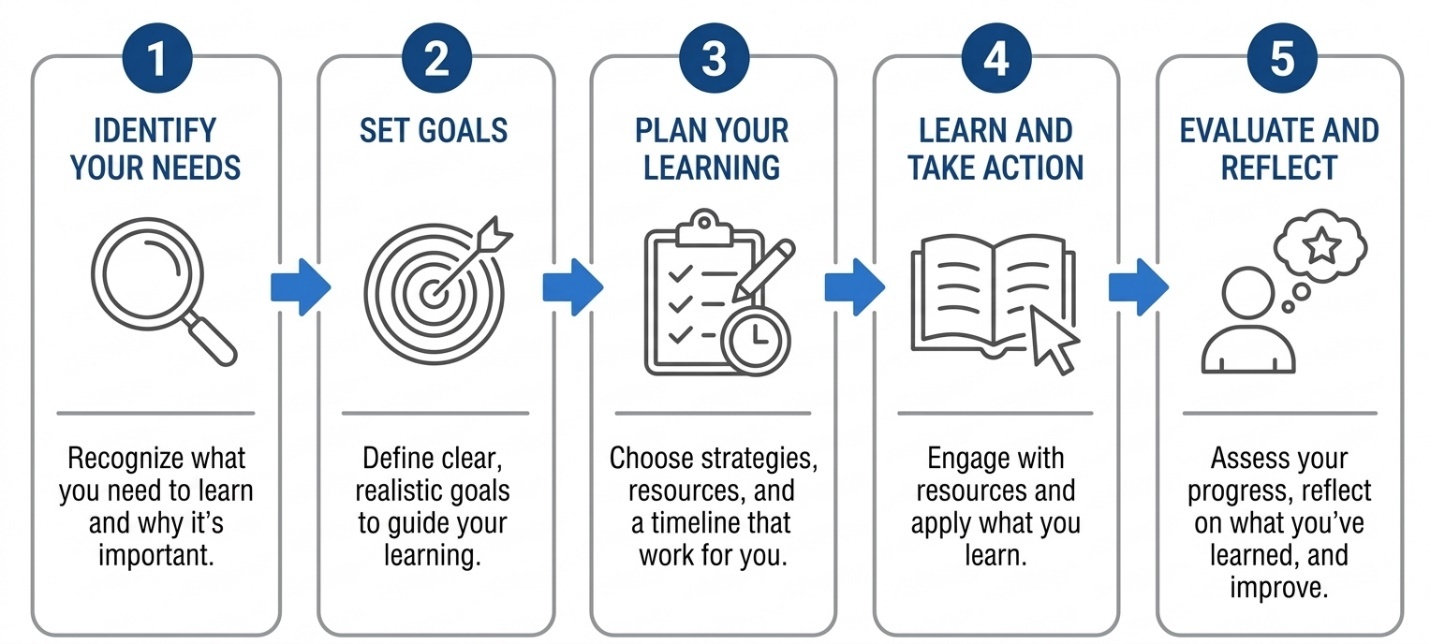
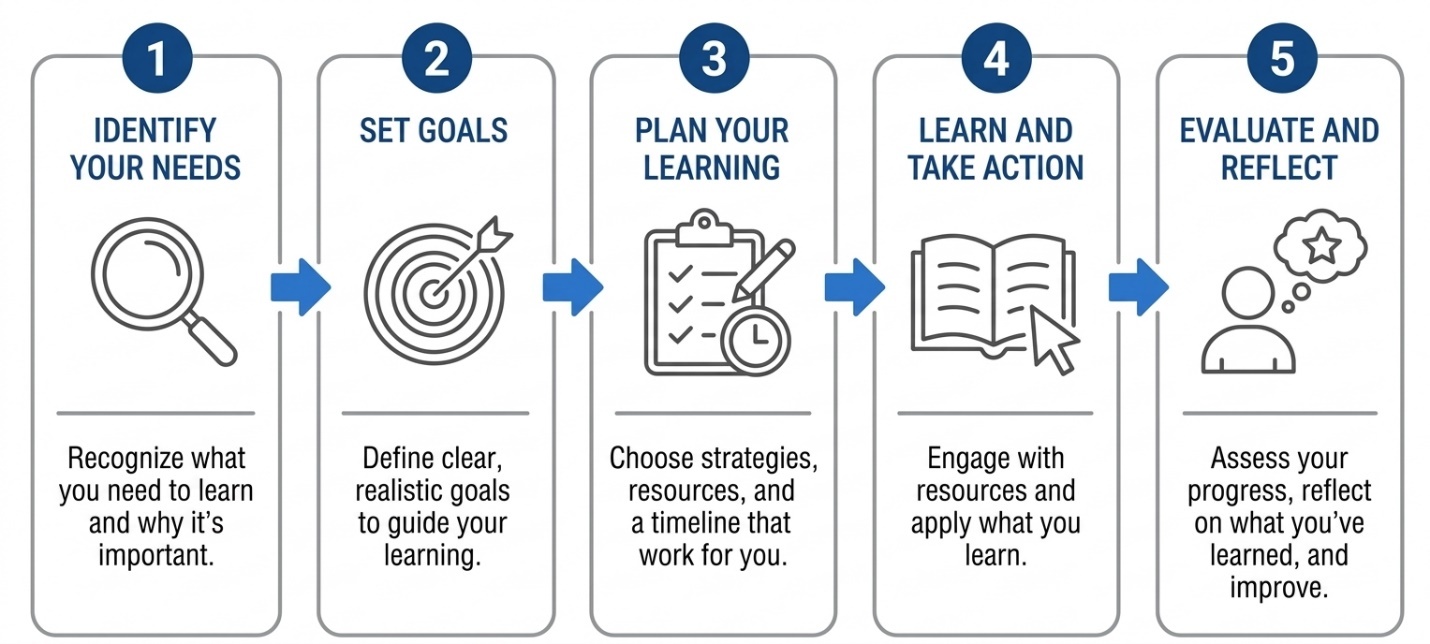
Self-directed learning (SDL) theory is a cornerstone of adult education, emphasizing the learner’s initiative in diagnosing needs, setting goals, and evaluating outcomes. In online environments, this theory is applied by shifting instructional control to the learner while providing necessary scaffolding and support. The concept of SDL emerged from the humanist philosophy of Carl Rogers and was further developed by Knowles (1975) and Garrison (1997), who wrote about SDL as self-management, self-monitoring, and motivation. SDL was a rejection of an excessively teacher-centered traditional educational experience, which too often demonstrated little trust and respect for the competency of adult learners to take responsibility for their own learning (Bloomberg, 2021). Self-directed learning is essentially a learner-centered approach that has specific applicability to the adult online learner who may experience less structure than a traditional classroom-based learner, and thus needs to develop specific strategies to stay independent, focused, and on track. Self-directed learning encompasses methods of teaching that shift the focus of instruction to be centered on enabling the learner identify their own needs, set goals, plan, evaluate and reflect (Bloomberg, 2021). As illustrated in Figure 3, a facilitator would adopt a learner-centered approach, supporting and guiding the learner in their quest to become successfully self-directed.
Research suggests several ways SDL theory functions within the context of adult online learning (Al Harrasi, 2023; Morris, 2019):
Autonomy and responsibility: Online learning often places the primary responsibility for planning, implementing, and evaluating learning on the student. This approach honors the adult learner’s capacity for self-determination and independent thought.
The role of scaffolding: While SDL encourages independence, successful implementation in online settings requires supportive pedagogical approaches, such as explicit instruction, prompt feedback, and guidance from facilitators.
Integration of social and autonomous learning: SDL models often bridge the gap between autonomous study and social collaboration. Online learners frequently leverage collaborative spaces to form communities, which support the exploration of contextual meaning and help alleviate the isolation that typically characterizes online education.
Heutagogy
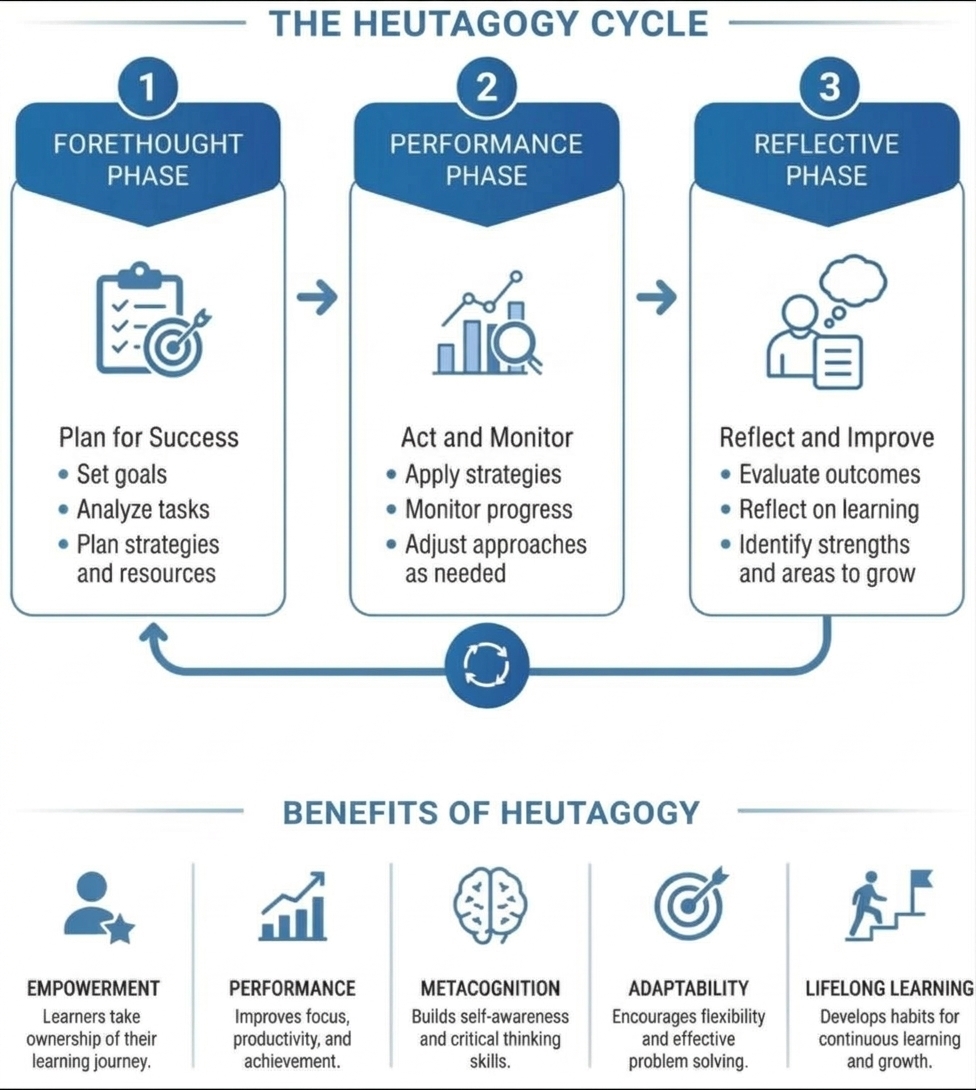
Heutagogy, first introduced by Hase and Kenyon (2000) is a learner-centered approach in which learners decide what, how, and why they learn, with an emphasis on capability, adaptability, and learning how to learn. The phrase is derived from the Greek words “heutos” (self) and “agogos” (leading). It is apparent that heutagogy places the student in charge of their own learning, in contrast to classical pedagogy, which views the instructor as the primary source of information, and andragogy, which emphasizes learner-driven education but remains within a set curriculum. Heutagogy’s foundation includes the use of double-loop, reflective learning, developing self-determined, capable, and autonomous learners, through mentorship and contractual learning. In essence, learners shape both the goals and the process of their own learning. McAuliffe et al. (2009) proposed the following heutagogical principles:
Learner-centric: The learner’s needs, interests, goals, and abilities are central to learning. Heutagogy recognizes that each learner is unique, and their education should reflect that.
Self-regulation: Learners must learn to manage their learning, from goal setting to resource selection and self-assessment. Self-regulation fosters independence and adaptability.
Experiential learning: Learning is most effective when rooted in real-life experiences. Heutagogy promotes experiential learning by providing context and relevance to knowledge acquisition.
Reflection: Critical reflection helps learners develop metacognitive skills, allowing them to understand how they learn and how they can improve their learning process.
Resource diversification: Encourages learners to explore a wide range of resources, including books, materials, mentors, and peers, to gain a comprehensive understanding of their chosen subjects.
Educator as facilitator: Learning is non-linear and flexible, and the educator serves as a facilitator and guide.
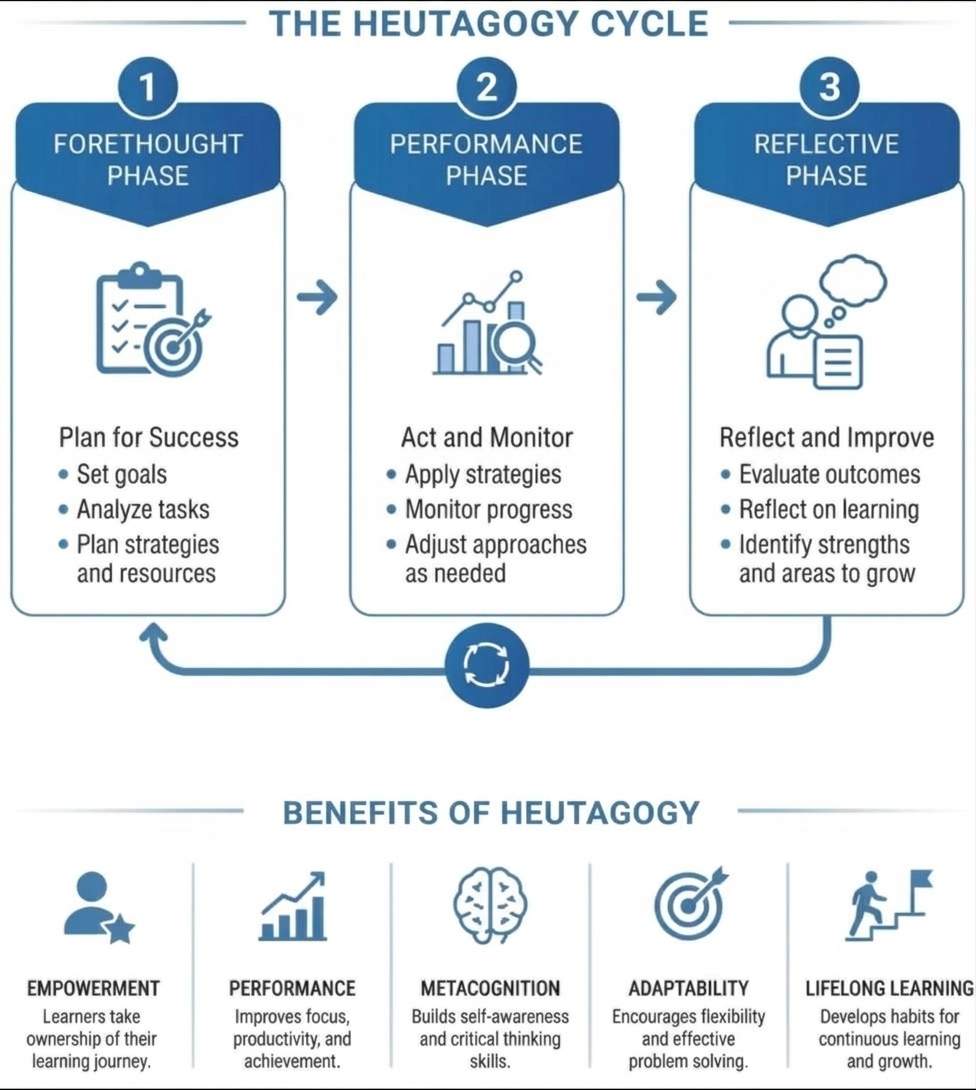
As illustrated in Figure 4, heutagogy enhances the autonomy of student learning, their passion for expanding their knowledge, and increases satisfaction and enjoyment of learning by way of an increased sense of capability and agency; all of which are related to a successful online learning experience. Heutagogy is thus of special interest to adult online education with its focus on learner autonomy and self-direction.
Understanding the theory of heutagogy and viewing its progression from andragogical principles through a more comprehensive conceptualization of the adult online learner provides insights into the online learner’s adaptability and ability to progress along the learning continuum. This continuum implies the evolution toward a collaborative approach with the instructor providing guidance and mentorship to support the individual learner’s needs and academic goals (Blaschke & Hase, 2019; Glassner & Back, 2020; Kenyon & Hase, 2010). The work of Blaschke (2012, p. 2104) and Stoten (2021) provide practical insights into online course design that prioritizes learner self-determination, choice of learning paths, and flexible scheduling; all of which are critical for the adult online learner success. The systematic review of Moore (2020) explored the contexts, critiques, and challenges of using heutagogy to develop lifelong learners. These works collectively suggest that for adult online learners, heutagogy is a practical framework that can be conceptualized to support the adult learner’s journey in online environments, with the purpose of leveraging technology to increase engagement, motivation, and professional capability.
Heutagogy certainly offers a wide range of benefits in higher educational settings and demonstrates specific applicability to online contexts. The characteristics of this approach effectively support adults engaging in online learning through alignment with the key elements of online education’s characteristics, including technology-based, self-directed, autonomous, and contractual learning (Hensley, 2024). Furthermore, many features of heutagogy align with online graduate education which requires self-directed and self-reflective learning in order to conduct research and contribute to the scholarly body of knowledge. Heutagogy’s emphasis on mentorship and contractual learning (Hase & Kenyon, 2000; Kenyon & Hase, 2010) addresses online graduate education’s need for commitment to the integration of mentorship, structured support, and focused guidance for student success (Hensley, 2024).
Online Learner Skills: Self-Regulation and Autonomy
As the review above illustrates, to be successful in online classes, learners need to be autonomous and self-regulated in order to be able to manage their time, motivate themselves to work on schedule, and seek support when needed. One major online learning challenge occurs because many online learners are still developing these life skills. Additionally, because of the flexibility it offers, online learning can also run the risk of simply becoming another appointment or engagement in the daily schedule, along with a range of other work and personal commitments in an environment without traditional boundaries, set hours, routines, and the regular types of interaction with instructors and peers as would occur in a traditional educational environment. In addition to feeling disconnected, adult online learners are typically juggling multiple work and family demands.
In online contexts, self-regulation becomes especially important due to increased autonomy and potential distractions. Self-regulation plays a critical role in online learning because online environments typically require students to manage much of their own learning process. Research consistently shows that students who demonstrate strong metacognitive skills, such as tracking their understanding, adjusting strategies, and seeking help when needed, are more intrinsically motivated and perform better in online courses (Eom, 2019). Recent research indicates that learners who develop self-regulated learning strategies, often reflected in patterns of LMS interaction and engagement behaviors, are better able to maintain engagement and achieve learning outcomes in online courses (Hensley, 2024; Unal Cakiroglu et al., 2024).
Unlike traditional face-to-face settings where schedules, reminders, and physical presence provide external structure, online courses often demand that learners independently plan, monitor, and evaluate their own progress. When students effectively regulate their learning, they are more likely to stay engaged, persist through challenges, and achieve stronger academic outcomes in virtual environments. Self-regulated learning generates an optimistic change in learners’ responsibility towards learning and endows them with self-control over their learning process, eventually leading them toward becoming self-directed and functioning autonomously (Mekala & Radhakrishnan, 2019). It is important to note that while self-directed learning is concerned with learners’ control over the direction and goals of their learning, self-regulated learning refers to learners’ ability to manage and optimize their learning strategies for completing given tasks.
According to Yeh et al. (2019) in online courses, students must control and be responsible for their learning. In an online learning environment, courses are typically more flexible, so students need to develop self-regulated skills to become autonomous and successfully engage in their learning experience. Yeh, et al. (2019) describe self-regulated skills to encompass the following:
-
Goal setting
-
Strategic planning
-
Metacognitive skills
-
Time management
-
Environmental structuring
-
Persistence
-
Seeking and embracing support
Additionally, metacognitive strategies, including self-monitoring, planning ahead, and evaluating one’s accomplishments through critical self-reflection, can help build self-regulation skills (Bloomberg, 2021; Cho & Heron, 2015; Mekala & Radhakrishnan, 2019; Öztürk & Türker, 2026; Vishwakarma & Tyagi, 2023). Metacognition, self-regulation, and self-directed learning are interconnected cognitive control processes. As explained by Klimas (2017), autonomous learners consciously make use of reflection, analysis, and evaluation skills, thereby reiterating the significance of self-directed learning, achieved through the integration of metacognitive strategies and self-regulated learning skills. It is clear that not all learners enter online courses with well-developed self-regulation skills, the lack of which could contribute to attrition or non-completion. As a result, effective online programs will intentionally scaffold these skills through structured deadlines, progress checkpoints, interactive activities, regular and valuable self-reflective feedback, and implementing self-regulated learning strategies (Bloomberg, 2021). Furthermore, teaching students how to learn online, rather than assuming they already know this, has become a key component of promoting persistence and achievement in online education environments (Bloomberg, 2021, 2022, 2023, 2024; Öztürk & Türker, 2026; Vishwakarma & Tyagi, 2023).
Where to From Here?
Online education has evolved from a peripheral delivery model, prior to the onset of the pandemic in early 2020, to a central and strategic component of educational systems worldwide. Institutions increasingly view online learning as an intentional design choice that expands access, supports diverse learners, integrates digital fluency as a core competency, and elevates the capacity for global collaboration and community development. Initially designed to increase access and flexibility, early online courses tended to replicate traditional lecture-based formats. Today’s online education reflects a more sophisticated and learner-centered paradigm. Advances in learning management systems, adaptive technologies, and analytics have enabled interactive, multimodal, and data-informed course design and instruction.
Student engagement in the online environment represents far more than a strategy for improving completion rates. Perhaps most significantly, engagement emerges as a stronger predictor of student success than individual characteristics or institutional factors, placing significant opportunity in the hands of educators who can directly influence course design, feedback practices, and strategic approaches to facilitate autonomous and self-regulated strategies and meaningful interactions among learners, instructors, and content (Bloomberg, 2021, 2026; McNeil & Ahlf, 2026). Any discussion of learner engagement must, as a priority, include careful consideration with regard to the ways in which online teaching practices are fully inclusive of all learners and can be adapted to support those with disabilities, linguistic diversity, and limited digital access, as well as those from racial and ethnic minority backgrounds and socioeconomically underserved populations (Bloomberg, 2021, 2022, 2023, 2024, 2026).
Ensuring online learner success requires a combination of intentional course design, proactive support, and the cultivation of learner self-regulation skills (Andrade & Bunker, 2009; Bloomberg, 2021, 2026; Eom, 2019). Effective online courses are structured with clear learning objectives, consistent navigation, and diverse instructional materials that accommodate different learning preferences. Instructors play a critical role by providing timely feedback, fostering engagement through interactive activities, and creating a sense of community that combats isolation. Equally important is supporting learners’ self-regulation and self-direction, including time management, goal setting, and self-assessment strategies, as these skills directly influence persistence and performance in virtual environments. Additionally, institutions can enhance success by offering ongoing and accessible technical support, orientation programs, and mentorship opportunities, ensuring that learners are equipped not only academically but also emotionally and technologically to navigate online learning challenges. Meeting online learners’ needs requires more than just providing access to content and technology. Effective engagement demands intentional design, ongoing structured support, and application of evidence-based pedagogical practices.
Disclosure
Generative AI was used to create the infographics for this article (Figures 1-4).