Loading [Contrib]/a11y/accessibility-menu.js
Marvel, M. (2026). Artificial Intelligence and Student Wellness in Higher Education: A Systematic Review With Implications for Online Graduate Education. Journal of Online Graduate Education, 9(2), 106–126. https://doi.org/10.65201/001c.172007
Download all (1)
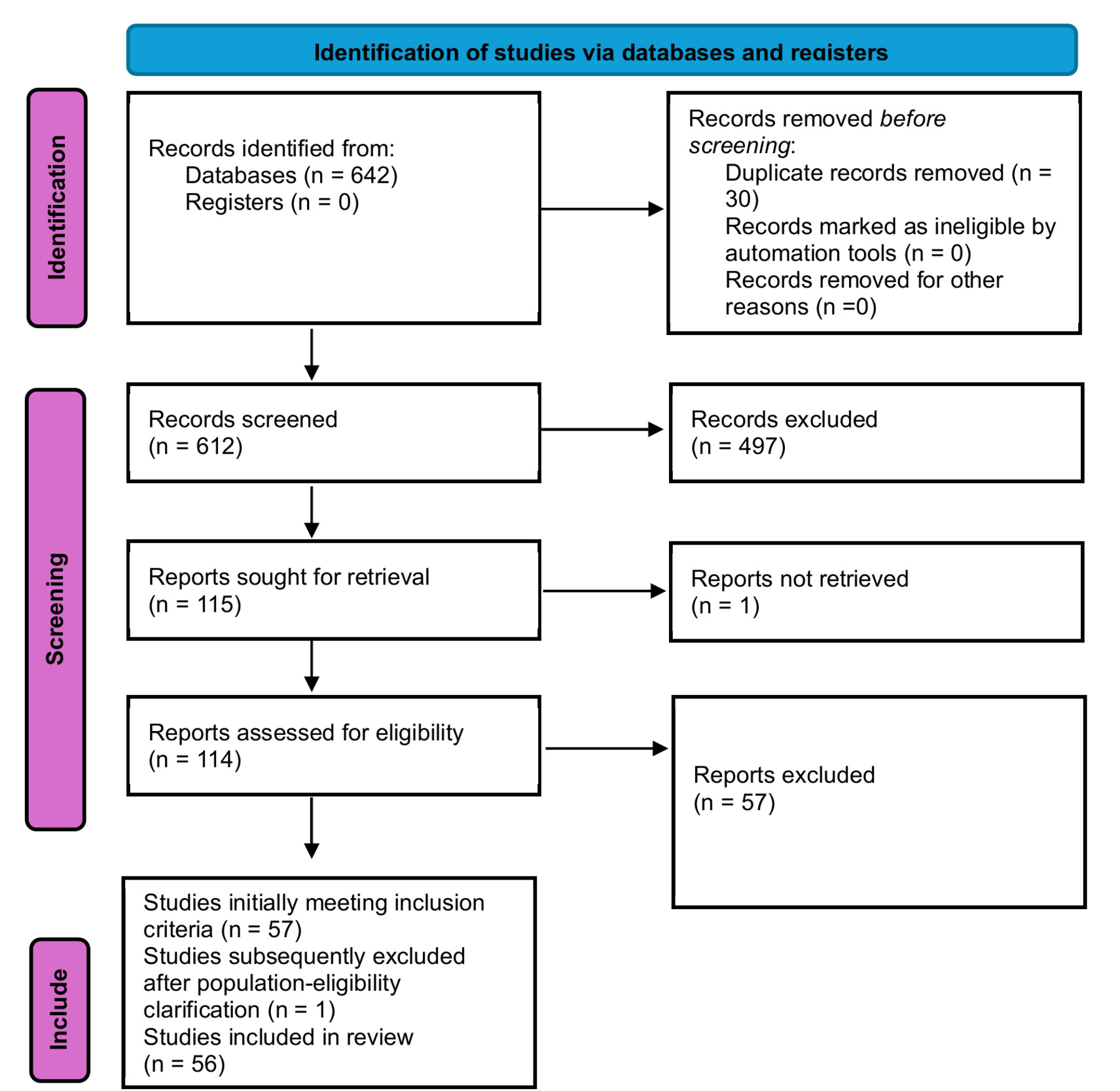
  • Figure 1. PRISMA 2020 Flow Diagram of Study Identification and Selection

Abstract

Artificial intelligence (AI) is increasingly being applied as a tool for student wellness. This systematic review of literature examined how AI has been used for student wellness in higher education. It also explored the methodological approaches and the reported evidence for studies of AI and student wellness, as well as how student wellness outcomes have been defined and measured across existing literature. In alignment with PRISMA 2020 guidelines, searches were conducted across the following databases on September 13, 2025: Academic Search Complete, ERIC, Springer Nature, and ScienceDirect. Only empirical studies that focused on higher education students, included an identifiable AI or machine learning (ML) component, and examined a wellness outcome were eligible for inclusion. Of 642 identified records, 56 studies met the criteria for inclusion. The majority of the included studies (75%) were classified as quantitative observational or survey research, and prediction and classification of student wellness concerns was the primary focus of AI use among them. Studies applying experimental, quasi-experimental, or qualitative designs were less common. This article presents the findings of this systematic review, and it provides a foundation for considering how the findings may inform the use of AI to support student wellness in online graduate education. The article also demonstrates the need for more specific research on AI in online graduate education.

Online graduate education provides students with the opportunity to earn an advanced degree while maintaining work and family responsibilities. In their study of 244 online graduate students, Hernández González and Blackford (2022) found that conflicts between work, family, and school roles weakened student engagement and intrinsic motivation. Likewise, Bedford (2024) identified several challenges that online graduate students face while pursuing their degree, such as isolation, stress, and the need to balance their personal life with their academic pursuits. Bedford (2024) called for faculty and institutional support to address the needs of online graduate students and recommended the use of digital tools for support. While these articles were not part of the systematic review, they do demonstrate the importance of recognizing and supporting student wellness in online graduate education (Bedford, 2024; Hernández González & Blackford, 2022).

As artificial intelligence (AI) becomes more widely available, it introduces new opportunities for examining student wellness. In the field of higher education, AI and machine learning have been used to evaluate student mental well-being, stress, suicide risk, fatigue, boredom, and sleep disturbance (Abdul Rahman et al., 2023; Lekkas et al., 2022; Liao et al., 2024; Shen et al., 2020; L. Zhang et al., 2024a). AI has also been explored as a tool for providing direct student support; for instance, He et al. (2022) evaluated an AI mental health chatbot. These studies indicate that AI has a wide range of applications for student wellness.

A systematic review provides an opportunity to see how AI has been applied to student wellness, examine the evidence supporting those applications, and explore how wellness constructs have been defined and measured. The purpose of this systematic review was to examine empirical research on AI and student wellness in higher education. While the review examined literature across the broad field of higher education, the documented wellness and support needs of online graduate students provide a rationale for considering the implications of these findings within online graduate education (Bedford, 2024; Hernández González & Blackford, 2022). For online graduate education, an examination of AI and student wellness in higher education literature provides a basis for considering which applications warrant further study in this population. The following research questions guided this review:

RQ1: How is artificial intelligence used in higher education research related to student mental health and wellness?

RQ2: What methodological approaches are used, and what evidence is reported regarding effectiveness, accuracy, or impact on student mental health and wellness outcomes?

RQ3: What psychological, behavioral, academic, digital, or contextual constructs are examined and operationalized in relation to student mental health and wellness outcomes in higher education AI research?

Methods

The PRISMA 2020 guidelines (Page et al., 2021) were used as a framework to guide the review process. This review was not prospectively registered. No external funding was received for this review, and the author had no competing interests.

Eligibility Criteria

Studies were eligible for inclusion if they met the following criteria: (a) used qualitative, quantitative, or mixed-methods, (b) focused on college or university students, (c) included a clearly identified AI or machine-learning (ML) component, and (d) examined a student wellness outcome. For eligibility purposes, an AI/ML component was considered to be clearly identified when the study described the use of AI or ML technology as part of the research approach, intervention, or application being examined. Searches were limited to peer-reviewed studies published in English from January 1, 2015, to August 31, 2025. Studies that did not meet these criteria were excluded.

Search Strategy

On September 13, 2025, searches were conducted on four databases: Academic Search Complete (n = 390), ERIC (n = 154), Springer Nature (n = 98), and ScienceDirect (n = 125). The search strategies combined terms pertaining to artificial intelligence and related technologies, mental health and wellness, and higher education populations. Database-specific syntax was applied as appropriate. Although 125 records were initially identified through ScienceDirect, none of those contributed unique records to the dataset following filtering and deduplication. The complete search strings are presented in Appendix A.

Selection Process

All records identified through database searches were imported into Zotero for deduplication and reference management. Duplicate records were removed. Records were screened for eligibility using title and abstract screening, followed by full-text review. The established eligibility criteria were applied at each stage. All title and abstract screening and full-text eligibility decisions were completed by one reviewer. Records that were identified as potentially eligible advanced to full-text review, and reasons for exclusion were documented.

Data Extraction

After the final sample was identified, the data were extracted into a Microsoft Excel spreadsheet. The following predefined fields were applied: study design, AI role, wellness domain, outcome measurement, and key findings. Standardized classifications were applied based on the information presented in the studies and predefined criteria and rules. AI roles were classified based upon the function of AI reported within each study, including prediction/classification or risk modeling, detection/monitoring, intervention/support, and mixed or other applications. Wellness outcomes were classified into three standardized domains: general well-being, mental health, and sleep/fatigue.

The extracted data were organized around the three research questions that guided the review. For RQ1, the role and approach of AI was examined. For RQ2, studies were examined for methodological approach, and reported evidence regarding accuracy, effectiveness, or impact. For RQ3, the wellness constructs and the measures and indicators that were used for those wellness outcomes were identified. Due to the heterogeneity of the studies, findings were synthesized descriptively rather than through meta-analysis. Data extraction and analysis were completed by one reviewer. The completed data set was reviewed against the source articles to check accuracy and consistency of the extracted information and classifications. A formal risk of bias assessment for individual studies was not conducted. The review was designed to descriptively examine how AI has been studied in relation to student wellness across a heterogeneous body of research rather than to evaluate the comparative quality or certainty of evidence across studies.

Results

Study Selection

The database searches identified 642 records. Following the removal of 30 duplicate records, 612 records underwent title and abstract screening, of which 497 were excluded. Of the 115 reports identified for full-text retrieval, one could not be retrieved, leaving 114 reports for full-text review. Following full-text review, 57 studies were excluded, and 57 initially met the inclusion criteria. One study was subsequently excluded following clarification of population eligibility, resulting in a final sample of 56 studies. The study selection process is presented in the PRISMA 2020 flow diagram (Figure 1).
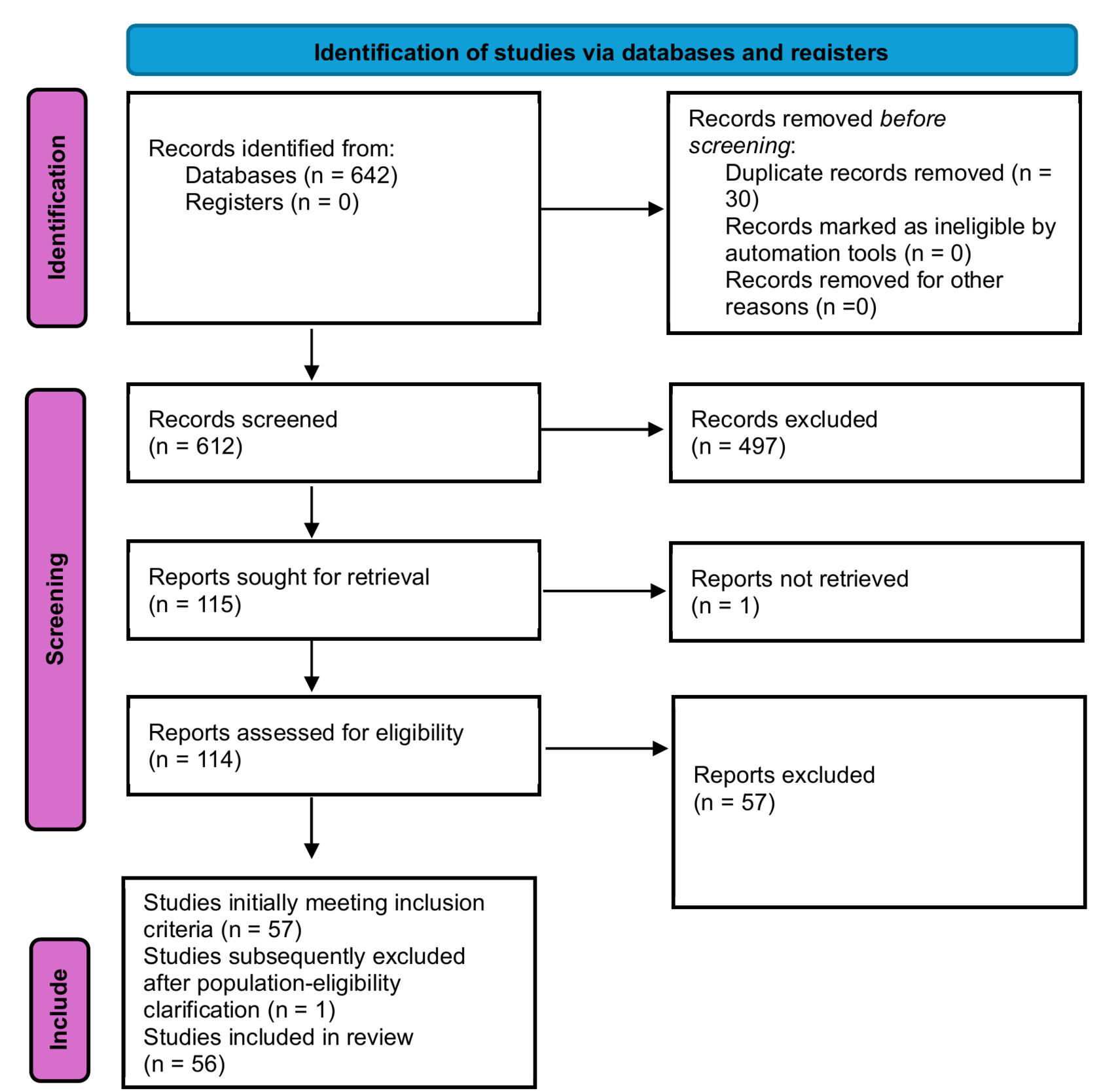
Figure 1
Figure 1.PRISMA 2020 Flow Diagram of Study Identification and Selection

Note. Adapted from the PRISMA 2020 flow diagram (Page et al., 2021), licensed under CC BY 4.0.

Characteristics of Included Studies

The 56 studies that were included in this review represented a range of higher education populations, methodological approaches, AI applications, and student wellness outcomes. The characteristics of the individual studies that were included in this review are presented in Appendix B.

AI Roles and Applications (RQ1)

The included studies examined the use of AI across several roles in student wellness. Prediction and classification of student well-being using AI or ML models were common applications (Abdul Rahman et al., 2023). AI was also used for student stress (Liao et al., 2024; Rois et al., 2021), depression (Siraji et al., 2023; Teng et al., 2024), suicide risk (Macalli et al., 2021; Naghavi et al., 2020; Shen et al., 2020), and sleep disturbance (L. Zhang et al., 2024a). Other studies combined AI and behavioral or digital data; for instance, Lekkas et al. (2022) analyzed smartphone data in models predicting student fatigue and boredom.

AI was also explored as a tool for student wellness support and intervention. Both He et al. (2022) and Qi (2025) studied chatbots for students with depressive symptoms. Among college students, AI interventions were also studied for speaking anxiety (El Shazly, 2021), loneliness (Lu & Guo, 2025), psychological well-being (C. Wang et al., 2025), and emotional well-being (Zong & Yang, 2025).

Methodological Approaches and Reported Evidence (RQ2)

Of the 56 studies, 42 were classified as quantitative observational or survey research (75%). Quantitative experimental designs accounted for five studies (8.9%), and three (5.4%) were classified as quantitative quasi-experimental studies. Five studies (8.9%) applied mixed methods, and one study (1.8%) was qualitative. The standardized study types are presented in Table 1.

Table 1.Standardized Study Types of Included Studies (N = 56)
Study Type n %
Quantitative observational/survey 42 75.0
Quantitative experimental 5 8.9
Quantitative quasi-experimental 3 5.4
Mixed methods 5 8.9
Qualitative 1 1.8
Total 56 100.0

Within these broad methodological categories, studies used research designs such as cross-sectional surveys, secondary data analyses, experimental designs, and many also applied predictive AI or ML modeling. Predictive studies often reported on model performance. For example, Shen et al. (2020) reported area under the curve (AUC) of 0.93 for a random forest model that was used to identify suicide risk among Chinese medical students.

The studies that evaluated AI interventions for student wellness focused more on changes in wellness outcomes rather than model performance. For example, He et al. (2022) evaluated changes in student depressive symptoms during a randomized controlled trial of an AI mental health chatbot. The quasi-experimental study by Qi (2025) examined student depressive symptoms and an AI “Woebot” intervention. Across the 56 studies, the application of AI to student wellness, and the methodological approaches used to examine them varied.

Wellness Constructs and Outcomes (RQ3)

Multiple dimensions of student wellness were identified in the literature. Through application of standardized wellness-domain classifications, the following were identified: mental health (n = 28), general well-being (n = 26), and sleep/fatigue (n = 2). Mental health was used to classify studies pertaining to clinical depression, clinical anxiety, suicidality, and burnout. General well-being was used to classify non-clinical wellness constructs ranging from non-clinical emotional well-being, such as stress, to student motivation and resilience. Sleep and fatigue made up the smallest portion of the student wellness outcomes presented in the studies. Table 2 presents the student wellness domains that were identified in the review of literature.

Table 2.Student Wellness Domains Examined Across Included Studies (N = 56)
Wellness Domain n %
Mental health 28 50.0
General well-being 26 46.4
Sleep/fatigue 2 3.6
Total 56 100.0

Across the literature in the review, student wellness outcomes were evaluated using a variety of measures; for example, some studies used established scales to assess depression, anxiety, stress, and psychological well-being (He et al., 2022; Pereira et al., 2025). Some predictive studies used model-performance metrics, such as accuracy, area under the curve (AUC), sensitivity, specificity, and F1 scores, to evaluate the performance of AI or ML models (Naghavi et al., 2020; Shen et al., 2020; L. Zhang et al., 2024a). Other studies applied behavioral or digital indicators, such as smartphone use or sensor data (Lekkas et al., 2022; Liao et al., 2024). Kohnke and Moorhouse (2025) used semi-structured interviews to examine student motivation, anxiety, stress, and emotional wellness through generative AI support.

Discussion

This systematic review of literature examined how AI has been used for student wellness in higher education, the methodological approaches and evidence reported in the studies, and how student wellness was defined and measured. The review findings indicate that AI has been studied across a wide range of student wellness concerns and applications in higher education; however, the nature of the available evidence varies considerably. The following discussion of the findings is organized according to the three research questions, followed by the implications for online graduate education.

AI Roles and Applications

The first research question examined how AI is currently being used for student wellness. Across the included studies, AI was applied to a broad range of student wellness outcomes and roles. These applications included predicting or classifying student wellness outcomes such as depression, suicide risk, stress, and sleep disturbance, as well as analyzing behavioral or digital data related to fatigue and boredom (Lekkas et al., 2022; Liao et al., 2024; Macalli et al., 2021; Shen et al., 2020; Siraji et al., 2023; Teng et al., 2024; L. Zhang et al., 2024a). Other studies examined AI-supported interventions or services, including mental health chatbots and intelligent academic advising (El-kholy, 2025; He et al., 2022; Qi, 2025).

These findings illustrate an important element of how AI is being studied in higher education, and they highlight an important area for consideration. Using AI to predict or identify a wellness concern differs from using AI to provide student support in response to that concern. For instance, an AI model that identifies students who are at risk for depression differs from a chatbot that provides support for students with depressive symptoms. It is important for universities to recognize these distinctions when evaluating the potential applications of AI.

For online graduate education, this distinction provides a useful way to consider how AI might contribute to student wellness. AI applications that identify or predict wellness concerns serve different functions than applications that are designed to provide direct student support. Some programs may benefit more from applications that identify and predict student wellness concerns, while other programs may choose to concentrate more on AI support interventions that online students can access. Online graduate programs should consider the specific needs of online graduate students and the intended role of the AI when evaluating potential AI applications.

Methodological Approaches

The second research question (RQ2) examined the methodological approaches used to study AI and student wellness and the reported accuracy, effectiveness, or impact of the AI applications. Quantitative observational or survey research accounted for 75% of the studies. Experimental and quasi-experimental studies were less common, and only one study was qualitative. The methods used are important in interpreting the findings of the studies and in identifying areas where further research is needed.

Much of the literature focused on how AI can be used to identify or predict student wellness. For instance, there were studies that evaluated how well AI or ML applications predicted suicide risk (Macalli et al., 2021; Naghavi et al., 2020; Shen et al., 2020). These findings provide valuable information about the performance of these models; however, model performance studies do not necessarily establish whether the AI models result in improvements in student wellness outcomes.

A smaller portion of the literature focused on AI interventions and student wellness outcomes. He et al. (2022) noted reductions in student depressive symptoms in a randomized controlled trial of a mental health chatbot. Qi (2025) noted some reduction in mild depressive symptoms following students interacting with their “Woebot,” which was also an AI chatbot. El-kholy (2025) found that postgraduate students experienced increased satisfaction and reduced stress after using an AI advising system. These studies focus more on the student wellness outcomes following AI intervention than studies of predictive model performance. This distinction is also important for the field of online graduate education. Before applying AI to student wellness support, programs should consider whether there is established evidence that the AI application can identify a wellness concern and whether the existing literature has examined its effects on student wellness outcomes.

Overall, the literature focuses more heavily on AI prediction of student wellness constructs than on how AI supports student wellness. Additional experimental, quasi-experimental, longitudinal, and qualitative research would provide a wider range of evidence for understanding AI and student wellness. Further studies on AI interventions and student wellness outcomes are also needed.

Wellness Constructs

The third research question examined how student wellness constructs were presented and measured across the literature. Student wellness constructs varied considerably across the included studies. Depression, anxiety, stress, suicidality, burnout, psychological and emotional well-being, resilience, fatigue, boredom, and sleep disturbances are examples of student wellness constructs that were presented in the included studies (Abdul Rahman et al., 2023; Lekkas et al., 2022; Rois et al., 2021; Shen et al., 2020; Teng et al., 2024; L. Zhang et al., 2024b). The included studies reflect considerable variation in how student wellness was defined in the literature. The approaches that were used to measure these wellness constructs also varied considerably. Some studies used established scales to assess depression, anxiety, stress, or psychological well-being (He et al., 2022; Pereira et al., 2025). Several predictive studies of model performance presented the accuracy, area under the curve, sensitivity, specificity, and F1 scores of the AI or ML models (Naghavi et al., 2020; Shen et al., 2020; L. Zhang et al., 2024a). Other studies focused on behavioral or digital indicators of student wellness, such as information from smartphone use or sensor data (Lekkas et al., 2022; Liao et al., 2024). A qualitative study provided another perspective of student wellness by examining the student experience with AI learning and emotional support interventions (Kohnke & Moorhouse, 2025).

The variation in the wellness constructs and how they were measured are important considerations when determining how AI can be used for student wellness and what further research is needed. Studies of how well an AI model identifies or predicts a student wellness outcome provide useful information on the specific models and wellness constructs that they study; however, they do not answer how students experience AI wellness support or how AI interventions affect student wellness. Future studies should distinguish between AI or ML model performance studies and studies of AI wellness support and interventions.

For online graduate education, these findings suggest that student wellness must be clearly defined when considering AI applications. Different wellness concerns, such as stress, depression, fatigue, or general well-being, may require different AI approaches for identification, measurement, and student support; thus, clarifying the wellness needs of online graduate students is an important first step.

Implications for Online Graduate Education

This systematic review of literature evaluated 56 included studies across the broader field of higher education; however, much of the information on AI and student wellness is relevant to online graduate education. To frame these findings within the scope of online graduate education, two additional studies specific to online graduate students were considered separately from the systematic review. Bedford (2024) and Hernández González and Blackford (2022) identified the challenges that online graduate students face when balancing their academic, professional, and personal responsibilities. The authors also emphasized the importance of academic and emotional support for online graduate students (Bedford, 2024; Hernández González & Blackford, 2022). The AI applications that were identified in this systematic review may offer additional ways for programs to recognize needs and provide support for online graduate students.

One important consideration is the intended role of AI in student wellness. This review identified applications that predicted or classified student wellness concerns, as well as applications that provided direct student support. Predictive applications can help online graduate programs identify student wellness concerns, while intervention and support applications may provide additional ways for students to obtain assistance. Online graduate programs should distinguish between predictive model performance and evidence of effectiveness in supporting student wellness when considering AI applications.

The findings also indicate the importance of clearly identifying wellness concerns that AI applications are intended to address. The studies examined a wide range of wellness constructs using different measures and indicators; however, further research is needed to specifically explore AI and student wellness in online graduate education, including research that evaluates student wellness outcomes and experiences with AI wellness interventions.

Limitations

There are several limitations that should be considered when interpreting the findings of this systematic review of literature. The research methods, AI applications, and wellness constructs varied considerably across the included studies. This variance limited comparison across studies; therefore, the findings were synthesized descriptively rather than through meta-analysis. Quantitative observational or survey research dominated the literature, with few quasi-experimental, experimental, and qualitative studies. The literature focused more extensively on the ability of AI to identify or predict wellness outcomes than on whether AI applications improve student wellness. Future studies of AI and student wellness may find it helpful to focus more specifically on AI interventions for student wellness.

The literature searches were conducted across four academic databases and did not include supplementary reference list searching; thus, they may not have identified all available studies. The review was also conducted by a single reviewer, which increases the potential for error or bias during study selection, data extraction, and classification. Several steps were taken to mitigate error or bias, including predefined inclusion and exclusion criteria, structured data extraction, standardized coding categories, rule-based classification, documented reasons for full-text exclusion, automatic and manual deduplication, and quality control review of the completed dataset. A formal risk of bias assessment of the included studies was not conducted; therefore, the findings should not be interpreted as an assessment of study quality or certainty of evidence. The review was also not prospectively registered.

While the literature included in the systematic review did include some studies of graduate and postgraduate students, the review was not specific to online graduate education (El-kholy, 2025; Lekkas et al., 2022; Teng et al., 2024). Some of the findings on AI and student wellness are relevant to online graduate education; however, further research on AI and student wellness in online graduate education is needed.

Conclusion

This systematic review of literature examined 56 studies of AI and student wellness across the field of higher education. The findings demonstrate that AI has many potential applications, including identifying and predicting wellness concerns and providing support and interventions for student wellness. The literature predominantly used quantitative observational or survey methods, with fewer studies directly evaluating the impact or experience of AI. The findings indicate that AI was frequently used to identify or predict student wellness concerns; however, fewer studies examined whether these applications improve student wellness outcomes.

The present review identifies how AI is being used to identify and support student wellness in higher education. Other studies have established the challenges that students experience and called for academic and emotional support for students in online graduate education (Bedford, 2024; Hernández González & Blackford, 2022). Together, these studies provide a foundation for considering how AI might contribute to identifying and supporting student wellness in online graduate education. Further research into AI, student wellness, and online graduate education is needed to determine how AI applications can best support student wellness in this population. The data supporting this systematic review are reported within the article and its appendices.


Acknowledgement

Generative artificial intelligence (ChatGPT, OpenAI) was used to assist with table preparation and provide feedback on manuscript organization and clarity.

Accepted: September 28, 2026 EDT

References

Abdul Rahman, H., Kwicklis, M., Ottom, M., Amornsriwatanakul, A., H. Abdul-Mumin, K., Rosenberg, M., & Dinov, I. D. (2023). Machine learning-based prediction of mental well-being using health behavior data from university students. Bioengineering (Basel), 10(5), 575. https:/​/​doi.org/​10.3390/​bioengineering10050575
Google Scholar
Al-Azzam, S. H., & Al-Oudat, M. (2025). Artificial intelligence-based classification and prediction of academic and psychological challenges in higher education. Educational Process: International Journal, 15, 1–28. https:/​/​doi.org/​10.22521/​edupij.2025.15.150
Google Scholar
Al-Zahrani, A. M. (2025). Exploring the impact of artificial intelligence chatbots on human connection and emotional support among higher education students. SAGE Open, 15(2), 1–10. https:/​/​doi.org/​10.1177/​21582440251340615
Google Scholar
Bedford, L. (2024). Fostering a community of care in online graduate education: Leveraging the affective filter hypothesis. Journal of Online Graduate Education, 7(3). https:/​/​doi.org/​10.65201/​001c.141609
Google Scholar
Byers, M., Trahan, M., Nason, E., Eigege, C., Moore, N., Washburn, M., & Metsis, V. (2023). Detecting intensity of anxiety in language of student veterans with social anxiety using text analysis. Journal of Technology in Human Services, 41(2), 125–147. https:/​/​doi.org/​10.1080/​15228835.2022.2163452
Google Scholar
Çakmak, F. (2022). Chatbot-human interaction and its effects on EFL students’ L2 speaking performance and speaking anxiety. Novitas-ROYAL (Research on Youth and Language), 16(2), 113–131.
Google Scholar
Dagani, J., Buizza, C., Ferrari, C., & Ghilardi, A. (2024). Potential suicide risk among the college student population: Machine learning approaches for identifying predictors and different students’ risk profiles. Psicologia: Reflexão e Crítica, 37(1), 1–12. https:/​/​doi.org/​10.1186/​s41155-024-00301-6
Google Scholar
Deivasigamani, S., Hamad, H. J., Al-Bashabsheh, Z., Jagannathan, M., Sakthivel, B., & Gowrishankar, K. (2025). Machine learning-assisted prediction of associated risk factors for depression, anxiety and stress among nursing students. Cuestiones de Fisioterapia, 54(2), 284–294.
Google Scholar
El Shazly, R. (2021). Effects of artificial intelligence on English speaking anxiety and speaking performance: A case study. Expert Systems, 38(3), e12667. https:/​/​doi.org/​10.1111/​exsy.12667
Google Scholar
El-kholy, S. S. A. M. (2025). An intelligent system for providing academic advising and its impact on satisfaction and stress relief in the light of crises (COVID-19) among postgraduate students. Education and Information Technologies, 30, 1695–1727. https:/​/​doi.org/​10.1007/​s10639-024-12810-z
Google Scholar
Erdemir, N., & Atik, S. (2025). Validity and reliability analysis of the artificial intelligence–digital life balance scale. Psychiatric Quarterly. https:/​/​doi.org/​10.1007/​s11126-025-10167-1
Google Scholar
Guo, W., Hu, J., Qiang, Q., & Chen, X. (2024). Use of machine learning for simplification of the university personality inventory. Acta Psychologica, 251, 104629. https:/​/​doi.org/​10.1016/​j.actpsy.2024.104629
Google Scholar
Hanani, A., Mansour, M., & Badrasawi, M. (2024). Prediction of medical students’ mental health in Palestine during COVID-19 using deep and machine learning. Palestinian Medical and Pharmaceutical Journal, 9(4), 451–464. https:/​/​doi.org/​10.59049/​2790-0231.1295
Google Scholar
He, Y., Yang, L., Zhu, X., Wu, B., Zhang, S., Qian, C., & Tian, T. (2022). Mental health chatbot for young adults with depressive symptoms: A single-blind, three-arm randomized controlled trial. Journal of Medical Internet Research, 24(11), e40719. https:/​/​doi.org/​10.2196/​40719
Google Scholar
Hernández González, C. A., & Blackford, B. J. (2022). Engagement as antecedent of academic achievement and the moderating impact of work-family-school inter-role conflict for online graduate students. The International Journal of Management Education, 20(3), 100676. https:/​/​doi.org/​10.1016/​j.ijme.2022.100676
Google Scholar
Huang, F., Wang, Y., & Zhang, H. (2024). Modelling generative AI acceptance, perceived teachers’ enthusiasm, and self-efficacy in relation to EFL learners’ well-being in the digital era. European Journal of Education, 59(4), 1–14. https:/​/​doi.org/​10.1111/​ejed.12770
Google Scholar
Jin, K., Zeng, T., Gao, M., Chen, C., Zhang, S., Liu, F., Bao, J., Chen, J., Wu, R., Zhao, J., & Huang, J. (2025). Identifying suicidal ideation in Chinese higher vocational students using machine learning: A cross-sectional survey. European Archives of Psychiatry and Clinical Neuroscience, 275(4), 1231–1242. https:/​/​doi.org/​10.1007/​s00406-025-01973-6
Google Scholar
Kohnke, L., & Moorhouse, B. L. (2025). Enhancing the emotional aspects of language education through generative artificial intelligence: A qualitative investigation. Computers in Human Behavior, 167, 108600. https:/​/​doi.org/​10.1016/​j.chb.2025.108600
Google Scholar
Kong, W., Pei, Z., Guo, Z., Xu, R., & Zhao, J. (2025). Relationship matters: Using machine learning methods to predict the mental health severity of Chinese college freshmen during the pandemic period. Journal of Affective Disorders, 369, 392–403. https:/​/​doi.org/​10.1016/​j.jad.2024.09.168
Google Scholar
Lai, Z. C.-C. (2025). The impact of AI-assisted blended learning on writing efficacy and resilience. International Journal of Computer-Assisted Language Learning and Teaching, 15(1). https:/​/​doi.org/​10.4018/​IJCALLT.377174
Google Scholar
Lekkas, D., Price, G. D., & Jacobson, N. C. (2022). Using smartphone app use and lagged-ensemble machine learning for the prediction of work fatigue and boredom. Computers in Human Behavior, 127, 107029. https:/​/​doi.org/​10.1016/​j.chb.2021.107029
Google Scholar
Liao, Z., Fan, X., Ma, W., & Shen, Y. (2024). An examination of mental stress in college students: Utilizing intelligent perception data and the mental stress scale. Mathematics, 12(10), 1501. https:/​/​doi.org/​10.3390/​math12101501
Google Scholar
Lin, C.-H., Lin, S.-Y., Hu, B.-H., & Lo, C. O. (2024). Investigating mental health outcomes of undergraduates and graduate students in Taiwan during the COVID-19 pandemic. Journal of American College Health, 72(9), 3402–3409. https:/​/​doi.org/​10.1080/​07448481.2022.2162824
Google Scholar
Long, J., & Lin, J. (2024). Empowering English language learning and mental health using AI and big data. Education and Information Technologies, 29, 12703–12734. https:/​/​doi.org/​10.1007/​s10639-023-12267-6
Google Scholar
Lotfi, F., Lotfi, A., Lotfi, M., Bjelica, A., & Bogdanović, Z. (2025). Enhancing smart healthcare with female students’ stress and anxiety detection using machine learning. Psychology, Health & Medicine, 30(7), 1465–1484. https:/​/​doi.org/​10.1080/​13548506.2025.2484698
Google Scholar
Lu, X., & Guo, W. (2025). Utilizing artificial intelligence to enhance social connections: The alleviating effect of emotionally intelligent chatbots on loneliness. Disability and Rehabilitation: Assistive Technology. Advance online publication. https:/​/​doi.org/​10.1080/​17483107.2025.2540494
Google Scholar
Macalli, M., Navarro, M., Orri, M., Tournier, M., Thiébaut, R., Côté, S. M., & Tzourio, C. (2021). A machine learning approach for predicting suicidal thoughts and behaviours among college students. Scientific Reports, 11(1), 1–8. https:/​/​doi.org/​10.1038/​s41598-021-90728-z
Google Scholar
Mamun, M. A., & Al-Mamun, F. (2025). Predictive modeling of comorbid depression and anxiety symptoms among prospective university students: A GIS-based and machine learning study. Psychological Reports. Advance online publication. https:/​/​doi.org/​10.1177/​00332941251358203
Google Scholar
Mamun, M. A., Huraira, M. A., Begum, M., Hasan, M. H., Khan, M. M., Faruk, M. O., Kibria, M., Aktar, S., Muntashir, N., Das, P., Rahman, S., Siddiky, A., Hasan, M. M., Wazed, R., Das, M. K., Akter, S., Haque, A., Ferdaus, J., Hasan, M. E., & Almerab, M. M. (2025). Research experience and career factors in relation to mental health problems: Prevalence, risk factors, and machine learning-based predictive estimates. International Journal of Social Psychiatry. https:/​/​doi.org/​10.1177/​00207640251358085
Google Scholar
Naghavi, A., Teismann, T., Asgari, Z., Mohebbian, M. R., Mansourian, M., & Mañanas, M. Á. (2020). Accurate diagnosis of suicide ideation and behavior using robust ensemble machine learning: A university student population in the Middle East and North Africa region. Diagnostics, 10(11), 956. https:/​/​doi.org/​10.3390/​diagnostics10110956
Google Scholar
Nooripour, R., Ilanloo, H., Naveshki, M., Naveshki, S., Majd, M. A., Sikström, S., & Jafari, F. (2024). Evaluation of COVID-19 stress in university students according to their sociodemographic characteristics based on machine learning algorithms. Practice in Clinical Psychology, 12(1), 1–11. https:/​/​doi.org/​10.32598/​jpcp.12.1.288.9
Google Scholar
Noreen, R., Zafar, A., Waheed, T., Wasim, M., Ahad, A., Coelho, P. J., & Pires, I. M. (2025). Unraveling the inner world of PhD scholars with sentiment analysis for mental health prognosis. Behaviour & Information Technology, 44(10), 2244–2256. https:/​/​doi.org/​10.1080/​0144929X.2023.2289057
Google Scholar
Page, M. J., McKenzie, J. E., Bossuyt, P. M., Boutron, I., Hoffmann, T. C., Mulrow, C. D., Shamseer, L., Tetzlaff, J. M., Akl, E. A., Brennan, S. E., Chou, R., Glanville, J., Grimshaw, J. M., Hróbjartsson, A., Lalu, M. M., Tianjing Li, Loder, E. W., Mayo-Wilson, E., McDonald, S., & McGuinness, L. A. (2021). The PRISMA 2020 statement: an updated guideline for reporting systematic reviews. BMJ: British Medical Journal, 373(8286), 1–9. https:/​/​doi.org/​10.1136/​bmj.n71
Google Scholar
Pereira, M. G., Santos, M., Magalhães, R., Rodrigues, C., Araújo, O., & Durães, D. (2025). Burnout risk profiles in psychology students: An exploratory study with machine learning. Behavioral Sciences, 15(4), 505. https:/​/​doi.org/​10.3390/​bs15040505
Google Scholar
Qi, Y. (2025). Pilot quasi-experimental research on the effectiveness of the Woebot AI chatbot for reducing mild depression symptoms among athletes. International Journal of Human-Computer Interaction, 41(1), 452–459. https:/​/​doi.org/​10.1080/​10447318.2023.2301256
Google Scholar
Rasouli, S., Ghafurian, M., Nilsen, E. S., & Dautenhahn, K. (2024). University students’ opinions on using intelligent agents to cope with stress and anxiety in social situations. Computers in Human Behavior, 153, 108072. https:/​/​doi.org/​10.1016/​j.chb.2023.108072
Google Scholar
Rois, R., Ray, M., Rahman, A., & Roy, S. K. (2021). Prevalence and predicting factors of perceived stress among Bangladeshi university students using machine learning algorithms. Journal of Health, Population and Nutrition, 40(1), 1–12. https:/​/​doi.org/​10.1186/​s41043-021-00276-5
Google Scholar
Saif, N., Khan, S. U., Shaheen, I., Alotaibi, F. A., Alnfiai, M. M., & Arif, M. (2024). Chat-GPT: Validating technology acceptance model (TAM) in education sector via ubiquitous learning mechanism. Computers in Human Behavior, 154, 108097. https:/​/​doi.org/​10.1016/​j.chb.2023.108097
Google Scholar
Sanchez-Trigo, H., Molina-Martínez, E., Grimaldi-Puyana, M., & Sañudo, B. (2024). Effects of lifestyle behaviours and depressed mood on sleep quality in young adults: A machine learning approach. Psychology & Health, 39(1), 128–143. https:/​/​doi.org/​10.1080/​08870446.2022.2067331
Google Scholar
Sara, S. S., Rahman, M. A., Rahman, R., & Talukder, A. (2024). Prediction of suicidal ideation with associated risk factors among university students in the southern part of Bangladesh: A machine learning approach. Journal of Affective Disorders, 349, 502–508. https:/​/​doi.org/​10.1016/​j.jad.2024.01.092
Google Scholar
Sayed, B. T., Bani Younes, Z. B., Alkhayyat, A., Adhamova, I., & Teferi, H. (2024). To be with artificial intelligence in oral test or not to be: A probe into the traces of success in speaking skill, psychological well-being, autonomy, and academic buoyancy. Language Testing in Asia, 14, 49. https:/​/​doi.org/​10.1186/​s40468-024-00321-0
Google Scholar
Shen, Y., Zhang, W., Chan, B. S. M., Zhang, Y., Meng, F., Kennon, E. A., Wu, H. E., Luo, X., & Zhang, X. (2020). Detecting risk of suicide attempts among Chinese medical college students using a machine learning algorithm. Journal of Affective Disorders, 273, 18–23. https:/​/​doi.org/​10.1016/​j.jad.2020.04.057
Google Scholar
Shi, J., Liu, W., & Hu, K. (2025). Exploring how AI literacy and self-regulated learning relate to student writing performance and well-being in generative AI-supported higher education. Behavioral Sciences (Basel, Switzerland), 15(5). https:/​/​doi.org/​10.3390/​bs15050705
Google Scholar
Siraji, M. I., Rahman, A. A., Nishat, M. M., Al Mamun, M. A., Faisal, F., Khalid, L. I., & Ahmed, A. (2023). Impact of mobile connectivity on students’ wellbeing: Detecting learners’ depression using machine learning algorithms. PLOS ONE, 18(11), e0294803. https:/​/​doi.org/​10.1371/​journal.pone.0294803
Google Scholar
Song, C. (2025). Harmonising minds: How AI-powered learning tools shape music education students’ cognitive load, well-being and academic success. European Journal of Education, 60, e70122. https:/​/​doi.org/​10.1111/​ejed.70122
Google Scholar
Teng, C., Yang, C., & Liu, Q. (2024). Utilising AI technique to identify depression risk among doctoral students. Scientific Reports, 14(1), 1–15. https:/​/​doi.org/​10.1038/​s41598-024-83617-8
Google Scholar
Thity, N. T., Rahman, A., Dulmini, A., Yasmin, M. N., & Rois, R. (2025). An illustration of multi-class ROC analysis for predicting internet addiction among university students. PLOS ONE, 20(7), 1–17. https:/​/​doi.org/​10.1371/​journal.pone.0325855
Google Scholar
Wang, C., Wang, B., & Xu, D. (2025). The role of ChatGPT and Grammarly in promoting emotion regulation, psychological well-being, motivation, and academic writing in Chinese college students: A self-determination theory perspective. Learning and Motivation, 90, 102131. https:/​/​doi.org/​10.1016/​j.lmot.2025.102131
Google Scholar
Wang, M., Richmond, L. L., Schleider, J. L., Nelson, B. D., & Luhmann, C. C. (2025). Predicting internalizing symptoms with machine learning: Identifying individuals that need care. Journal of American College Health, 73(5), 2248–2257. https:/​/​doi.org/​10.1080/​07448481.2023.2277185
Google Scholar
Wang, N., & Kang, M. (2025). The role of AI and voice-activated technology in religious education in China: Capturing emotional depth for deeper learning. Journal of Religion and Health. https:/​/​doi.org/​10.1007/​s10943-025-02347-x
Google Scholar
Wolgast, A., & Bieletzke, S. (2025). Student–artificial intelligence conversations and sentiments: A process data analysis and reciprocal effects. European Journal of Psychology and Educational Research, 8(2), 69–82. https:/​/​doi.org/​10.12973/​ejper.8.2.69
Google Scholar
Zhang, L., Zhao, S., Yang, Z., Zheng, H., & Lei, M. (2024a). An artificial intelligence platform to stratify the risk of experiencing sleep disturbance in university students after analyzing psychological health, lifestyle, and sports: A multicenter externally validated study. Psychology Research & Behavior Management, 17, 1057–1071. https:/​/​doi.org/​10.2147/​PRBM.S448698
Google Scholar
Zhang, L., Zhao, S., Yang, Z., Zheng, H., & Lei, M. (2024b). An artificial intelligence tool to assess the risk of severe mental distress among college students in terms of demographics, eating habits, lifestyles, and sport habits: An externally validated study using machine learning. BMC Psychiatry, 24(1), 1–18. https:/​/​doi.org/​10.1186/​s12888-024-06017-2
Google Scholar
Zhang, X., Li, Z., Zhang, M., Yin, M., Yang, Z., Gao, D., & Li, H. (2025). Exploring artificial intelligence (AI) chatbot usage behaviors and their association with mental health outcomes in Chinese university students. Journal of Affective Disorders, 380, 394–400. https:/​/​doi.org/​10.1016/​j.jad.2025.03.141
Google Scholar
Zhao, J. (2022). Integrating mental health education into French teaching in university based on artificial intelligence technology. Journal of Environmental and Public Health, 2022, 1–9. https:/​/​doi.org/​10.1155/​2022/​1046813
Google Scholar
Zhao, Y., Ding, Y., Chekired, H., & Wu, Y. (2022). Student adaptation to college and coping in relation to adjustment during COVID-19: A machine learning approach. PLOS ONE, 17(12), 1–20. https:/​/​doi.org/​10.1371/​journal.pone.0279711
Google Scholar
Zhou, Q., Shi, X., & Ge, L. (2021). Predicting mental disorder from noisy questionnaires: An anomaly detection approach based on keyword extraction and machine learning techniques. Journal of Intelligent & Fuzzy Systems, 41(6), 7167–7179. https:/​/​doi.org/​10.3233/​JIFS-211044
Google Scholar
Zong, Y., & Yang, L. (2025). How AI-enhanced social–emotional learning framework transforms EFL students’ engagement and emotional well-being. European Journal of Education, 60, e12925. https:/​/​doi.org/​10.1111/​ejed.12925
Google Scholar

Appendices

Appendix A

Complete Database Search Strategies

Searches were limited to peer-reviewed studies published in English from January 1, 2015 to August 31, 2025.

ERIC (09/13/25; n = 154):
(“artificial intelligence” OR AI OR “machine learning” OR “chatbot*” OR “conversational agent*” OR “predictive analytics” OR “virtual coach*” OR “digital mental health” OR “wellness app*”)
AND (wellness OR “mental health” OR “well-being” OR stress OR burnout OR resilience OR “emotional support”)
AND (“higher education” OR universit* OR college* OR “postsecondary” OR “graduate student*” OR “doctoral student*” OR faculty OR professor*)

Academic Search Complete (09/13/25; n = 390):
(TI(“artificial intelligence” OR “machine learning” OR chatbot* OR “conversational agent*” OR “predictive analytics” OR “virtual coach*” OR “digital mental health” OR “wellness app*”)
OR AB(“artificial intelligence” OR “machine learning” OR chatbot* OR “conversational agent*” OR “predictive analytics” OR “virtual coach*” OR “digital mental health” OR “wellness app*”)
OR SU(“artificial intelligence” OR “machine learning” OR chatbot* OR “conversational agent*” OR “predictive analytics” OR “virtual coach*” OR “digital mental health” OR “wellness app*”))
AND (TI(wellness OR “mental health” OR “well-being” OR stress OR burnout OR resilience OR “emotional support”)
OR AB(wellness OR “mental health” OR “well-being” OR stress OR burnout OR resilience OR “emotional support”)
OR SU(wellness OR “mental health” OR “well-being” OR stress OR burnout OR resilience OR “emotional support”))
AND (TI(“higher education” OR universit* OR college* OR postsecondary OR “graduate student*” OR “doctoral student*” OR faculty OR professor*)
OR AB(“higher education” OR universit* OR college* OR postsecondary OR “graduate student*” OR “doctoral student*” OR faculty OR professor*)
OR SU(“higher education” OR universit* OR college* OR postsecondary OR “graduate student*” OR “doctoral student*” OR faculty OR professor*))

ScienceDirect (09/13/25; n = 125; 0 retained after filtering):
TITLE-ABSTR-KEY(“artificial intelligence” OR AI OR “machine learning” OR “chatbot*” OR “conversational agent*” OR “predictive analytics” OR “virtual coach*” OR “digital mental health” OR “wellness app*”)
AND TITLE-ABSTR-KEY(wellness OR “mental health” OR “well-being” OR stress OR burnout OR resilience OR “emotional support”)
AND TITLE-ABSTR-KEY(“higher education” OR universit* OR college* OR “postsecondary” OR “graduate student*” OR “doctoral student*” OR faculty OR professor*)

Springer Nature (09/13/25; n = 98):
(title:(“artificial intelligence” OR AI OR “machine learning” OR “chatbot*” OR “conversational agent*” OR “predictive analytics” OR “virtual coach*” OR “digital mental health” OR “wellness app*”)
OR abstract:(“artificial intelligence” OR AI OR “machine learning” OR “chatbot*” OR “conversational agent*” OR “predictive analytics” OR “virtual coach*” OR “digital mental health” OR “wellness app*”)
OR keyword:(“artificial intelligence” OR AI OR “machine learning” OR “chatbot*” OR “conversational agent*” OR “predictive analytics” OR “virtual coach*” OR “digital mental health” OR “wellness app*”))
AND (title:(wellness OR “mental health” OR “well-being” OR stress OR burnout OR resilience OR “emotional support”)
OR abstract:(wellness OR “mental health” OR “well-being” OR stress OR burnout OR resilience OR “emotional support”)
OR keyword:(wellness OR “mental health” OR “well-being” OR stress OR burnout OR resilience OR “emotional support”))
AND (title:(“higher education” OR universit* OR college* OR “postsecondary” OR “graduate student*” OR “doctoral student*” OR faculty OR professor*)
OR abstract:(“higher education” OR universit* OR college* OR “postsecondary” OR “graduate student*” OR “doctoral student*” OR faculty OR professor*)
OR keyword:(“higher education” OR universit* OR college* OR “postsecondary” OR “graduate student*” OR “doctoral student*” OR faculty OR professor*))

Appendix B

Characteristics of Included Studies

Table B1.Characteristics of Studies Included in the Systematic Review
Study Country Population Study Type AI Role Wellness Domain
Saif et al. (2024) Pakistan Discipline-specific students Quantitative observational/survey Support/Adoption General well-being
Lekkas et al. (2022) Netherlands Graduate students Quantitative observational/survey Prediction General well-being
He et al. (2022) China University students (unspecified) Quantitative, Experimental Intervention / Support Mental health
Shen et al. (2020) China Discipline-specific students Quantitative observational/survey Prediction Mental health
Rasouli et al. (2024) Canada Undergraduate students Quantitative observational/survey Intervention / Support Mental health
Naghavi et al. (2020) Iran Mixed undergraduate/graduate Quantitative observational/survey Predict / Classify / Risk Stratification Mental health
Zhang et al. (2024a) China University students (unspecified) Quantitative observational/survey Predict / Classify / Risk Stratification Sleep / Fatigue
Abdul Rahman et al. (2023) Southeast Asia (ASEAN) University students (unspecified) Quantitative observational/survey Predict / Classify / Risk Stratification General well-being
Mamun et al. (2025) Bangladesh Mixed undergraduate/graduate Quantitative observational/survey Predict / Classify / Risk Stratification Mental health
Erdemir & Atik (2025) Turkey University students (unspecified) Quantitative observational/survey Predict / Classify / Risk Stratification General well-being
Kohnke & Moorhouse (2025) China (Hong Kong SAR) University students (unspecified) Qualitative Intervention / Support General well-being
Wang, Wang, et al. (2025) China University students (unspecified) Quantitative, Quasi-experimental Intervention / Support General well-being
Byers et al. (2023) United States University students (unspecified) Mixed Methods Predict / Classify / Risk Stratification Mental health
Wang & Kang (2025) China Undergraduate students Quantitative, Experimental Detect / Monitor Mental health
Guo et al. (2024) China Undergraduate students Quantitative observational/survey Predict / Classify / Risk Stratification Mental health
Huang et al. (2024) China Mixed undergraduate/graduate Quantitative observational/survey Predict / Classify / Risk Stratification General well-being
Zhao (2022) China Undergraduate students Quantitative, Experimental Predict / Classify / Risk Stratification Mental health
Macalli et al. (2021) France University students (unspecified) Quantitative observational/survey Predict / Classify / Risk Stratification Mental health
El Shazly (2021) Egypt University students (unspecified) Mixed Methods Intervention / Support General well-being
Nooripour et al. (2024) Iran University students (unspecified) Quantitative observational/survey Predict / Classify / Risk Stratification General well-being
Liao et al. (2024) United States University students (unspecified) Quantitative observational/survey Predict / Classify / Risk Stratification General well-being
Zhou et al. (2021) China University students (unspecified) Quantitative observational/survey Detect / Monitor General well-being
Sara et al. (2024) Bangladesh University students (unspecified) Quantitative observational/survey Predict / Classify / Risk Stratification Mental health
Mamun & Al-Mamun (2025) Bangladesh University students (unspecified) Quantitative observational/survey Prediction / risk modeling Mental health
Rois et al. (2021) Bangladesh University students (unspecified) Quantitative observational/survey Predict / Classify / Risk Stratification General well-being
Siraji et al. (2023) Bangladesh University students (unspecified) Quantitative observational/survey Predict / Classify / Risk Stratification Mental health
Kong et al. (2025) China Undergraduate students Quantitative observational/survey Predict / Classify / Risk Stratification Mental health
Sanchez-Trigo et al. (2024) Spain University students (unspecified) Quantitative observational/survey Predict / Classify / Risk Stratification Sleep / Fatigue
Jin et al. (2025) China Discipline-specific students Quantitative observational/survey Predict / Classify / Risk Stratification General well-being
Zhao et al. (2022) United States Mixed undergraduate/graduate Quantitative observational/survey Predict / Classify / Risk Stratification General well-being
Hanani et al. (2024) Palestine Discipline-specific students Quantitative observational/survey Predict / Classify / Risk Stratification Mental health
Dagani et al. (2024) Italy University students (unspecified) Quantitative observational/survey Predict / Classify / Risk Stratification Mental health
Deivasigamani et al. (2025) Malaysia Discipline-specific students Quantitative observational/survey Prediction Mental health
Lotfi et al. (2025) Serbia University students (unspecified) Quantitative observational/survey Detect / Monitor Mental health
Pereira et al. (2025) Portugal Mixed undergraduate/graduate Quantitative observational/survey Other / Mixed AI role Mental health
Shi et al. (2025) China Mixed undergraduate/graduate Quantitative observational/survey Predict / Classify / Risk Stratification General well-being
Noreen et al. (2025) Pakistan Graduate students Quantitative observational/survey Other / Mixed AI role Mental health
Thity et al. (2025) Bangladesh University students (unspecified) Quantitative observational/survey Predict / Classify / Risk Stratification Mental health
Qi (2025) China Discipline-specific students Quantitative, Quasi-experimental Intervention / Support Mental health
Zhang et al. (2025) China University students (unspecified) Quantitative observational/survey Other / Mixed AI role Mental health
Lu et al. (2025) China University students (unspecified) Quantitative, Experimental Intervention Mental health
Teng et al. (2024) International Graduate students Quantitative observational/survey Other / Mixed AI role Mental health
Zhang et al. (2024b) China University students (unspecified) Quantitative observational/survey Other / Mixed AI role Mental health
Al-Zahrani (2025) Saudi Arabia University students (unspecified) Quantitative observational/survey Other / Mixed AI role General well-being
Wang, Richmond, et al. (2025) United States University students (unspecified) Quantitative observational/survey Prediction / risk modeling Mental health
Al-Azzam & Al-Oudat (2025) Jordan University students (unspecified) Quantitative observational/survey Prediction / risk modeling General well-being
Wolgast & Bieletzke (2025) Germany University students (unspecified) Quantitative observational/survey Monitoring General well-being
Song (2025) China Discipline-specific students Quantitative observational/survey Support/Adoption General well-being
El-kholy (2025) Egypt Graduate students Quantitative, Quasi-experimental Intervention General well-being
Zong & Yang (2025) China Mixed students (undergraduate + graduate) Quantitative observational/survey Support/Intervention General well-being
Lai (2025) Taiwan Undergraduate students Mixed Methods Intervention General well-being
Sayed et al. (2024) Ethiopia University students (unspecified) Mixed Methods Intervention General well-being
Long & Lin (2024) China Discipline-specific students Quantitative observational/survey Monitoring Mental health
Çakmak (2022) Turkey Undergraduate students Mixed Methods Intervention General well-being
Xu & Xu. (2024) China Discipline-specific students Quantitative, Experimental Intervention General well-being
Lin et al. (2024) Taiwan University students (unspecified) Quantitative observational/survey Machine learning – prediction Mental health

Note. Study characteristics are reported using the standardized classifications in the frozen extraction dataset.